
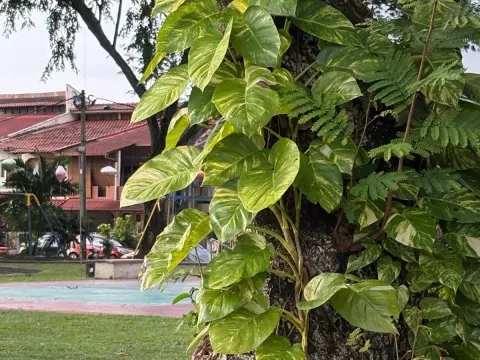
Epipremnum
Epipremnum
Epipremnum is a genus of flowering plants in the Araceae family, native to tropical forests in Southeast Asia and the Pacific. It is widely recognized for its robust, trailing stems and heart-shaped leaves, making it a popular indoor crop.
What the section contains


Epipremnum
Successful cultivation requires bright, indirect sunlight to maintain the plant's vigor and color patterns. While it can tolerate low light conditions, its growth rate will significantly decrease, and variegated foliage may turn completely green.
The ideal temperature for Epipremnum ranges from +18 to +26 degrees Celsius. The crop is sensitive to cold air exposure, so it should be kept away from drafts or air conditioning vents during winter months.
A well-draining, nutrient-rich potting medium is essential to support the extensive root system. A mixture of peat moss, perlite, and bark is generally recommended to ensure good aeration and moisture retention without waterlogging.
Regular monitoring of soil moisture is vital; the plant prefers to dry out slightly between waterings. Overhead watering should be avoided to prevent moisture from settling in the leaf axils, which can lead to fungal issues.
The most common pests affecting Epipremnum are mealybugs and scale insects. These pests feed on the plant's phloem, which often leads to stunted development, leaf yellowing, and sticky residue on the foliage.
Fungal pathogens such as Pythium and Phytophthora are primary threats, usually triggered by waterlogged soil conditions. They cause rapid decay of the roots and the base of the stems, leading to plant collapse.
Spider mites can be problematic in indoor environments with low relative humidity. They colonize the underside of leaves, causing them to lose their natural sheen and eventually die off if not treated promptly.
Effective management includes maintaining optimal humidity levels and ensuring good air circulation around the canopy. Preventive treatment with insecticidal soaps can control early infestations before they become systemic.
- Ensure adequate pot drainage.
- Avoid over-fertilization during dormancy.
- Isolate infected plants immediately.