
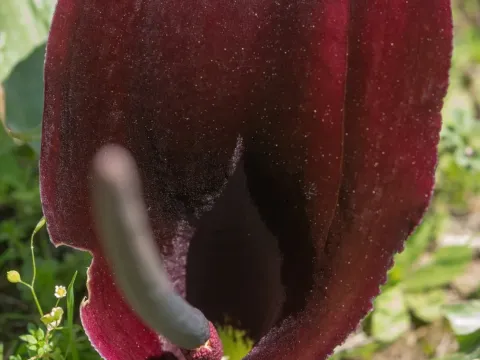
Eminium
Eminium
The propagation of Eminium is typically achieved through the division of mature tubers during their distinct period of biological dormancy.
What the section contains


Eminium
When planting, it is essential to ensure that the tubers are placed in a well-draining substrate that mimics the rocky environment of their native habitat.
Seed propagation is also possible but requires specialized conditions, including cold stratification to break seed dormancy and warm germination cycles.
Optimal planting time generally coincides with the start of the spring season when soil temperatures begin to rise, ensuring rapid establishment.
Spacing should be managed to prevent overcrowding, as proper air circulation is necessary to prevent fungal development around the crown of the plant.
Eminium is a fascinating genus within the Araceae family, known for its geophytic life cycle where the plant survives seasonal extremes as a subterranean tuber.
The species demands an extremely well-draining soil profile; heavy clay soils or organic-rich muds will almost certainly lead to root failure and tuber decay.
In terms of light, Eminium thrives in full sun or light dappled shade, reflecting its adaptation to Mediterranean and Middle Eastern climates.
Water requirements are strictly seasonal: heavy watering is beneficial during the spring growth phase, whereas total drought is required during the dormancy phase.
Proper cultivation techniques involve providing a lean, mineral-based soil mix and avoiding any fertilization that would encourage excessive soft tissue growth.
The primary threat to Eminium in cultivation is tuber rot caused by various fungal pathogens, which proliferate rapidly if soil moisture levels remain too high.
Bacterial soft rot can occur when temperatures are warm and humidity is trapped, causing the tuber to liquefy within a short span of time.
Pests such as spider mites may infest the foliage during exceptionally hot and dry spells, leading to chlorosis and premature senescence of the leaves.
Garden mollusks, including snails and slugs, are attracted to the succulent new growth and can severely defoliate the plant if not controlled effectively.
Effective management includes maintaining a rigorous dry cycle during the dormancy period and ensuring that the planting site is elevated to promote runoff.