
Colocasia hybrids
Colocasia hybrids
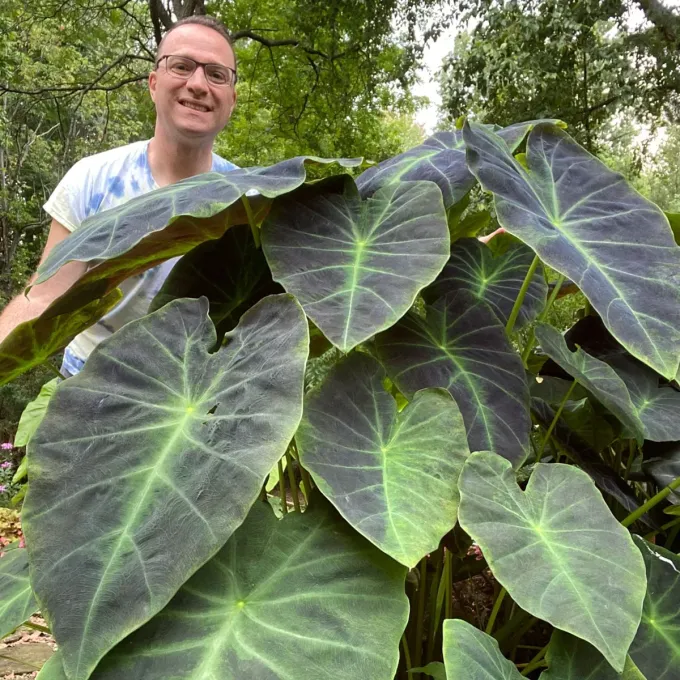
Description
Sowing dates
The planting of Colocasia hybrids should be conducted when the soil has warmed up, ensuring temperatures remain consistently above +15°C. In temperate regions, it is advisable to start the crop in greenhouses as seedlings 6–8 weeks before transplanting outdoors.
Spring is the optimal time to begin the growing season, aligning with the increase in daylight hours. It is crucial to avoid late frosts, as the tubers are highly sensitive to cold; they can quickly perish in cold, waterlogged soil.
The planting depth depends on the size of the corms, generally ranging from 5 to 10 centimeters. A spacing of 60–90 centimeters between plants is recommended to accommodate the massive foliage development characteristic of modern hybrids.
In commercial cultivation, uniform spacing is essential to facilitate mechanical maintenance and ensure adequate light penetration to the lower leaf tiers, which significantly boosts the plant's overall growth potential.
Pre-germinating tubers in a warm, moist medium can help shorten the adaptation period after transplanting. Using high-quality, disease-free propagation material is the foundation for a successful and productive growing cycle.
Growing requirements
Colocasia hybrids belong to the Araceae family and are tropical plants that thrive in warm, humid conditions. They require consistent moisture and high atmospheric humidity to maintain the turgor of their large leaves.
The crop prefers fertile, organic-rich soil with a pH range of 5.5 to 6.5. Soil with high humus content and good water-retention capacity is critical for the development of healthy, high-yielding tubers.
While most hybrids are shade-tolerant, they require bright, indirect light for maximum productivity. Direct midday sun can cause leaf scorch, so shading is often necessary in hotter climates to prevent damage to the foliage.
Temperature management is key; the ideal growth range is +22°C to +30°C. When temperatures drop below +10°C, the plant's metabolic processes effectively halt, and growth ceases entirely until warmer conditions return.
Agronomic practices include regular nitrogen fertilization during the active vegetative growth phase. High-level mineral nutrition is necessary to support both the massive above-ground biomass and the extensive root system.
Yield
The primary economic value of Colocasia lies in its starch-rich tubers, which are a dietary staple in many tropical countries. Yield potential is heavily dependent on the specific hybrid and the maintenance of consistent moisture levels throughout the season.
Under intensive management, individual plants can produce corms weighing 1–2 kilograms or more. Overall plantation productivity is competitive with other starchy root crops, such as sweet potatoes or yams, making it a viable agricultural commodity.
The use of modern irrigation systems and precision fertilization can significantly increase marketable yields. In some cases, leaf harvesting also contributes to the crop's overall economic feasibility.
The growing season until technical maturity ranges from 6 to 9 months, depending on the hybrid variety. Careful scheduling allows for optimal harvest timing before the plant enters its natural dormancy phase.
Elite hybrid material ensures uniformity in tuber shape and size, which simplifies post-harvest sorting and processing. Consistency is vital for meeting commercial standards and improving logistics for distribution.
Main diseases and pests
The main threats to Colocasia are fungal diseases, which thrive in conditions of excessive moisture and poor drainage. Phytophthora leaf blight is a particularly common and destructive issue that can affect both foliage and tubers.
Pests such as spider mites and aphids often infest the undersides of the large leaves, sapping the plant's energy. Regular monitoring and the application of biological control agents can effectively manage these populations.
Root rot, caused by waterlogging, is a serious risk that can lead to the total collapse of the plant. Ensuring adequate drainage and avoiding standing water around the root zone is crucial for plant health.
Slugs and snails frequently cause damage to young foliage by feeding on the leaves. Mechanical barriers and targeted pest management strategies are used to protect the plants during their early development stages.
To prevent the buildup of pathogens, it is vital to follow a crop rotation system and avoid planting in sites previously used for other Araceae crops. This helps break the infection cycle and maintains soil health.
Harvesting
Harvesting begins when the foliage starts to yellow and wither, signaling the end of the tuber filling phase. It is important to harvest carefully to avoid mechanical damage, as wounds to the tubers can promote rot during storage.
Harvesting is best done in dry weather to allow soil residues on the tubers to dry naturally. After lifting, the tubers should be cleaned of roots and loose soil, avoiding water washing, which can accelerate deterioration.
Proper storage requires a temperature of +10°C to +12°C and moderate humidity. Excellent ventilation in storage facilities is mandatory to prevent condensation, which can lead to mold and decay.
Sorting by size and maturity is a standard post-harvest step. Modern hybrids typically have a good shelf life if they are properly prepared for storage and kept protected from environmental pathogens.
For ornamental purposes, harvesting involves lifting the tubers for overwintering in a frost-free location. Packing them in dry sawdust or peat moss helps maintain appropriate moisture levels and prevents the corms from dehydrating during the winter months.