
Caladium arboreum
Caladium arboreum
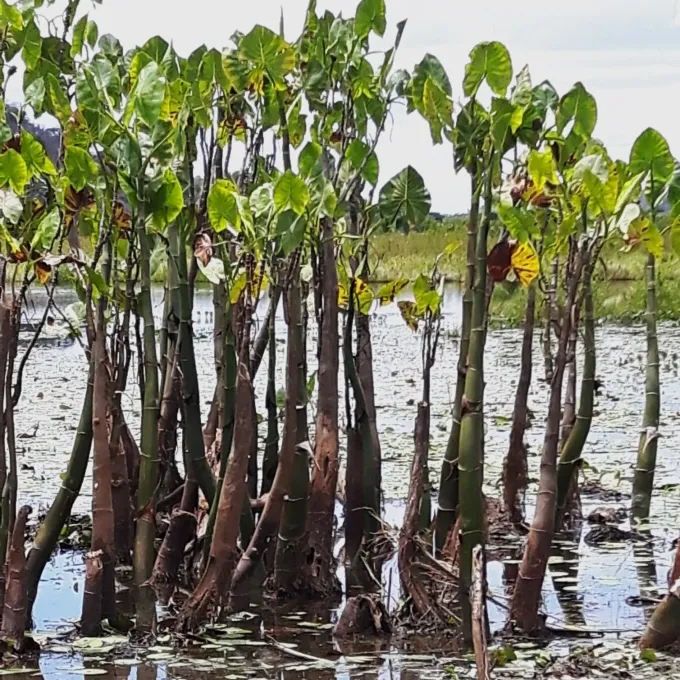
Description
Growing requirements
Caladium arboreum is an ornamental and botanical specimen belonging to the Araceae family. Unlike common dwarf varieties, this species is noted for its arborescent growth habit and large, impressive foliage which makes it a significant plant in tropical agriculture and landscaping.
Originating from the humid forests of South America, this plant is adapted to high-humidity environments. It thrives in well-drained, nutrient-rich soils with a slightly acidic pH level, requiring high organic matter content to support its significant vegetative mass.
The climate requirements for Caladium arboreum are stringent, focusing on tropical warmth. Ideal temperatures range between +22 and +28 degrees Celsius, and the plant is highly sensitive to frost and sudden temperature drops, which can cause significant tissue damage.
Light management is a critical aspect of its agrotechnology. The plant requires filtered light or partial shade to maintain leaf integrity. Exposure to harsh direct sunlight often leads to leaf scorching and loss of vigor, impacting the overall plant health.
Consistent moisture management is necessary for healthy development. The soil must be kept moist but never saturated. In agricultural settings, irrigation is often supplemented by misting to maintain the high atmospheric humidity required by the plant species.
Main diseases and pests
Root rot caused by fungal pathogens is the primary threat to Caladium arboreum. This condition is usually triggered by inadequate soil drainage or persistent overwatering, leading to the rapid decay of the underground parts of the plant.
Pest pressure often comes from common tropical threats such as spider mites and mealybugs. These pests feed on the nutrient-rich sap, causing structural weakness and inviting secondary bacterial or viral infections.
Integrated pest management (IPM) is essential for maintaining a healthy crop. This includes regular field scouting, biological control agents, and the targeted application of insecticides or acaricides when infestation thresholds are exceeded.
Disease prevention relies heavily on good sanitation practices. Removing diseased plant matter, using sterile potting substrates, and maintaining optimal airflow around the foliage are the most effective ways to prevent pathogen outbreaks.
Proper nutrient management also plays a role in plant defense. A balanced fertilizer program ensures that the plant has the necessary resources to strengthen its cellular walls, making it more resilient to external attacks from pests and common pathogens.