
Caladium hybrids
Caladium hybrids
Description
Growing requirements
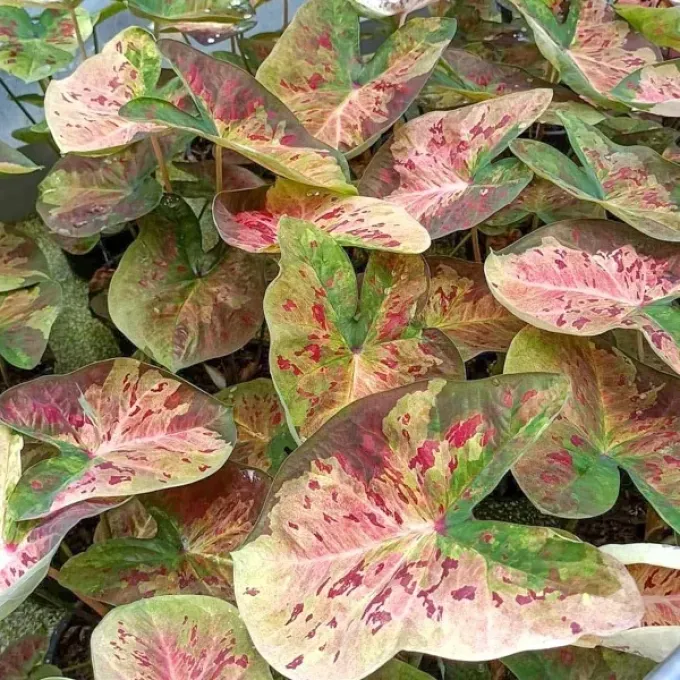
Caladium hybrids represent a group of tuberous ornamental plants belonging to the Araceae family. These plants are widely recognized for their heart-shaped foliage, which displays an extraordinary range of colors and complex patterns.
Originating from the tropical regions of Central and South America, these plants thrive in high-humidity environments. In commercial production, they are cultivated in greenhouses or tropical garden landscapes where temperatures remain consistently warm.
Proper growth requires bright, indirect light to maintain leaf coloration without causing scorching. The temperature should ideally be kept between 21 and 27 degrees Celsius, as the plant is highly sensitive to cold and enters dormancy when temperatures drop.
The substrate must be highly porous, consisting of peat, bark, and perlite to ensure excellent drainage. Water should be applied consistently to maintain moist soil, but the tubers must not sit in standing water to prevent decay.
During the growing season, fertilization is vital to promote lush leaf production. Using a balanced, slow-release fertilizer or water-soluble formulation twice a month supports the development of large, healthy tubers.
Main diseases and pests
Fungal infections, particularly Fusarium and Pythium, are the most significant threats to the crop. These pathogens typically thrive in poorly drained soil or contaminated potting media.
Pests such as aphids and spider mites are common in greenhouse environments, especially when air humidity is not sufficiently regulated or monitored.
Mealybugs represent another major threat, as they hide in the leaf crevices, sucking sap and weakening the plant structure over time.
Bacterial soft rot can occur if the humidity is too high combined with poor ventilation, causing the tubers to collapse rapidly.
Integrated pest management, including sanitation and the use of targeted insecticides, is recommended to ensure high yields and plant vitality.