
Alocasia reversa
Alocasia reversa
Description
Growing requirements
Alocasia reversa is a distinct herbaceous perennial species belonging to the Araceae family. Originating from the limestone forest regions of Borneo, this plant has adapted to specific ecological niches, which defines its demanding requirements in a cultivation environment.
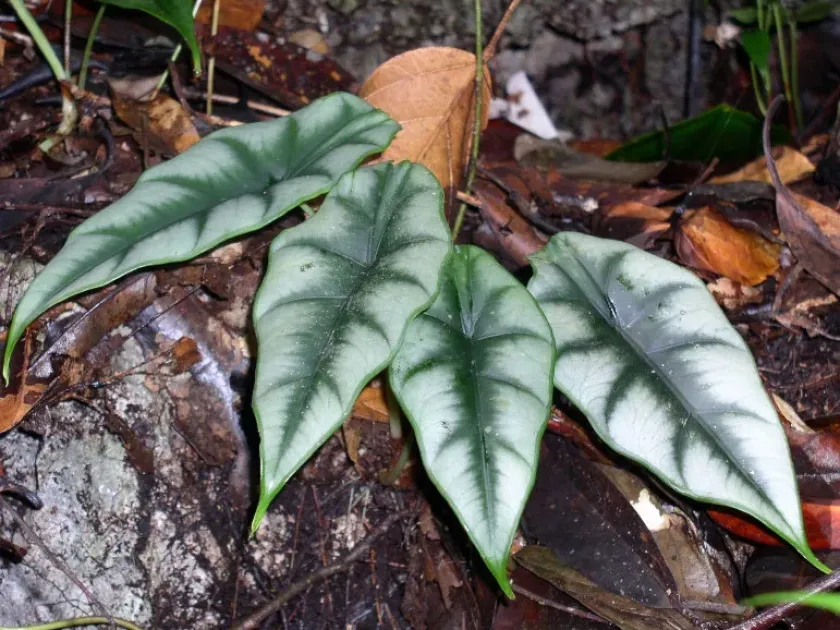
Botanically, it is recognized for its unique silver-veined leaf pattern on a dark green surface, which makes it highly sought after in the decorative plant industry. The plant maintains a compact growth habit, characterized by sturdy petioles and heart-shaped foliage that can retain its ornamental value under controlled conditions.
Regarding climatic requirements, the species thrives in consistent tropical conditions with temperatures ranging from 22 to 26 degrees Celsius. It is highly sensitive to thermal shocks and prolonged exposure to temperatures below 15 degrees Celsius, which can lead to metabolic slowdown or complete dormancy.
The agronomy of this crop relies heavily on substrate selection. A loose, well-draining, and slightly acidic medium is essential to mimic the plant's natural habitat. Incorporating elements such as pine bark, perlite, and coconut husk ensures adequate oxygenation for the sensitive root system.
Maintenance of high ambient humidity, ideally above 70%, is mandatory for healthy development. Irrigation practices must be precise, focusing on maintaining moderate soil moisture without inducing waterlogging, which is critical for preventing the degradation of the rhizome structure.
Main diseases and pests
The most significant pathological threat to Alocasia reversa is root rot, typically caused by Pythium or Phytophthora species. These pathogens thrive in waterlogged conditions and poorly aerated soils, quickly causing the collapse of the root system.
Pest pressures are primarily dominated by spider mites, which flourish in low-humidity environments. Additionally, mealybugs and scale insects may infest the foliage, piercing the plant tissue and causing visible damage while weakening the plant's overall vigor.
Management strategies involve rigorous hygiene protocols, including the sterilization of tools and the use of sterile substrates. Early detection of pests through weekly inspections is vital to implementing control measures before populations reach economically damaging thresholds.
Fungal leaf spots represent another common issue, often exacerbated by moisture accumulation on the leaf surfaces. Improving air circulation around the plants and avoiding overhead irrigation can significantly reduce the incidence of these foliar diseases.
Effective chemical or biological control programs should be customized to the plant's sensitivity. Utilizing systemic fungicides and acaricides during the early stages of infestation is necessary to ensure the longevity and productivity of the cultivated stock.