
Alocasia melo
Alocasia melo
Description
Growing requirements
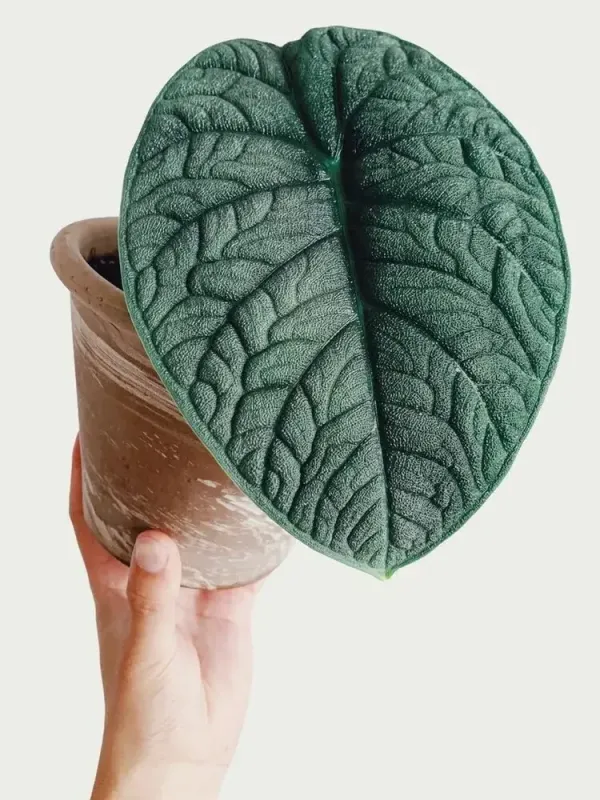
Alocasia melo is a fascinating member of the Araceae family, renowned for its thick, textured foliage that resembles a melon rind. Native to the limestone outcrops of Borneo, this plant is adapted to specialized microclimates characterized by high humidity and moderate light filtered through a dense forest canopy.
To cultivate this plant successfully, one must maintain temperatures between +20°C and +28°C. It is strictly a tropical indoor plant that cannot tolerate frost or cold drafts, which cause the plant to enter a state of dormancy or suffer from irreparable tissue damage.
The substrate requirement is specific: it must provide excellent drainage while retaining sufficient moisture. A mix of orchid bark, perlite, pumice, and high-quality coco coir creates an airy environment for the roots, mimicking the rocky, porous surfaces the plant grows on in the wild.
Lighting should be bright but indirect to preserve the deep green coloration and the unique embossing of the leaves. Direct sunlight is highly detrimental, as the thick, succulent-like leaves are prone to rapid burning under intense ultraviolet exposure.
Watering requires precision: allow the substrate to dry out partially before re-moistening. Overwatering is the most common cause of failure, leading to root rot. Using tepid, distilled, or filtered water prevents the accumulation of minerals that can damage the delicate root hairs.
Main diseases and pests
The most significant threat to Alocasia melo is root rot, typically caused by waterlogged soil and poor ventilation. Symptoms include yellowing leaves and a softened stem base, indicating that the vascular system is no longer functioning correctly due to fungal infection.
Pests such as spider mites and mealybugs are persistent adversaries. Spider mites thrive in the dry air of modern homes and can quickly deplete the plant's vitality, leading to discolored, spotted foliage and eventual leaf senescence if left untreated.
Management of these threats involves frequent observation and immediate intervention. Wiping the leaves with a mild soapy solution or using horticultural oils can help manage populations before they explode. For severe infestations, systemic insecticides are recommended.
Fungal leaf spots can also occur if water remains on the leaf surface for extended periods without adequate air circulation. Keeping the environment clean and ensuring that no water sits in the crevices of the plant is a critical preventative measure.
Maintaining strong plant health through balanced fertilization and appropriate light exposure acts as the primary defense mechanism against biotic stressors. A healthy Alocasia melo is naturally more resilient to minor pest attacks and environmental fluctuations.