
Alocasia sinuata
Alocasia sinuata
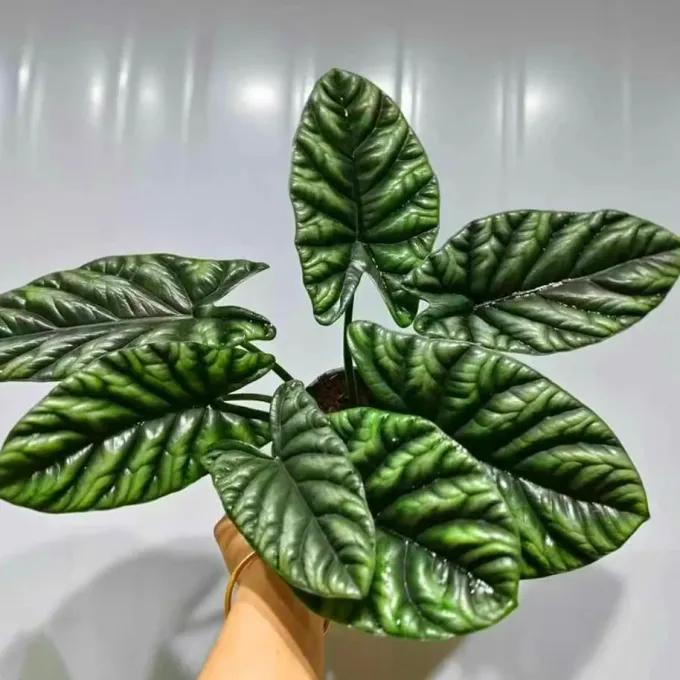
Description
Growing requirements
Alocasia sinuata is a perennial evergreen herb belonging to the Araceae family. This species is native to the Philippines, typically found in limestone-rich environments within humid rainforest habitats.
Cultivation requires strict adherence to temperature ranges between +20°C and +25°C. Exposure to cold drafts or temperatures below +15°C can lead to dormancy or the collapse of the leaf stalks.
High humidity levels are essential for the healthy development of its signature glossy, deeply lobed leaves. In commercial nurseries, maintaining relative humidity at 60-80% is standard practice for this crop.
The substrate must provide excellent aeration and drainage. Growers typically use a specialized mix containing sphagnum moss, orchid bark, perlite, and charcoal to prevent water stagnation in the root zone.
Light requirements for this species include bright, indirect sunlight. Low light conditions result in slower growth, while intense direct sun will scorch the foliage and destroy the aesthetic value of the plant.
Main diseases and pests
Root rot caused by Phytophthora or Pythium species is the most significant threat to Alocasia sinuata. It is often triggered by overly dense soil mixtures or watering schedules that do not account for the drying time of the medium.
Spider mites are the most common pest, thriving in dry indoor environments. These pests congregate on the underside of leaves, causing fine stippling and eventual leaf drop if left untreated.
Mealybugs and aphids can also impact the plant's health. Integrated Pest Management (IPM) practices, including the use of neem oil or systemic insecticides, are recommended to control population outbreaks.
Bacterial leaf spots can occur when water is left on the foliage for extended periods in low-ventilation environments. Ensuring proper airflow and avoiding overhead watering are key prevention strategies.
Regular inspection of the root ball during repotting is vital to ensure no signs of decay are present, as the plant's tubers are sensitive to moisture imbalances.