
Molopospermum peloponnesiacum
Molopospermum peloponnesiacum
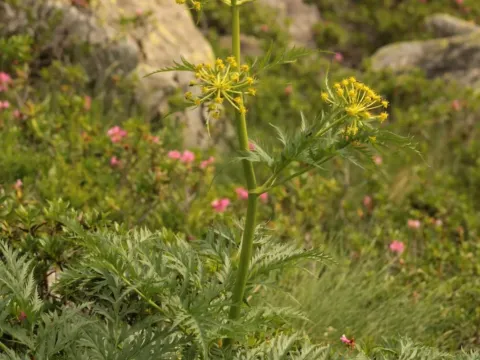
Molopospermum peloponnesiacum is a perennial herb belonging to the Apiaceae family. Native to mountainous regions of Southern and Central Europe, it thrives in rocky, high-altitude habitats, showing a preference for cool and humid environments typical of its origin.
What the section contains
Molopospermum peloponnesiacum
Botanically, the plant is distinguished by its large, finely dissected foliage and sturdy stems that can grow up to 1.5 meters tall. Its flowers form large, yellow umbels, which are characteristic of its family, contributing to its aesthetic appeal in botanical collections.
The plant has specific climate requirements, preferring areas with moderate temperatures and a cool growing season. It performs best in partial shade, as direct, harsh sunlight can cause scorching of the leaves and physiological stress to the plant.
Regarding soil conditions, Molopospermum requires fertile, well-draining soil rich in organic matter. A neutral to slightly acidic pH is ideal for nutrient uptake, and it is essential to ensure that the ground does not become waterlogged to prevent root health issues.
General cultivation practices include maintaining consistent soil moisture and providing protection from extreme weather. Mulching is highly recommended to regulate soil temperature and retain moisture, effectively mimicking the natural environment of mountain slopes.
The primary threats to Molopospermum are fungal infections triggered by excessive moisture and poor air circulation. Root rot is particularly damaging and often results from poor drainage or prolonged saturation of the growing medium in the root zone.
Aphids are the most common insect pests encountered on these plants, frequently clustering on young shoots and flower buds. Control strategies should include regular monitoring and the application of suitable insecticides or horticultural oils if an infestation occurs.
Powdery mildew can affect the foliage during periods of fluctuating humidity, especially when the plants are grown in overcrowded conditions. Improved spacing between individual plants is an effective preventive measure to ensure better airflow and reduced disease incidence.
Soil-dwelling larvae can pose a risk to the root system, potentially causing stunted growth or collapse of the plant. Using healthy, certified planting material and implementing crop rotation techniques can significantly reduce the pressure from soil-borne pests.
Sanitation practices, such as the removal and destruction of infected foliage and debris at the end of the season, are essential to break the disease cycle. Consistent field hygiene ensures long-term health and vigor of the Molopospermum population.