
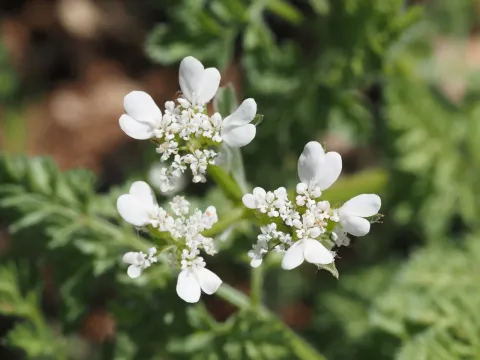
Orlaya kochii
Orlaya kochii
Orlaya kochii is an annual herbaceous plant belonging to the Apiaceae family. Seeds are typically sown directly into the open ground in spring, once the soil has warmed to at least 10–12 degrees Celsius.
What the section contains
Orlaya kochii
Starting seeds indoors in seed trays or peat pots is possible in March for an earlier bloom. However, caution is advised as the plant has a sensitive taproot and does not respond well to transplanting.
Seeds should be sown at a depth of 0.5 to 1 cm. Germination generally occurs within 14 to 20 days, provided that the substrate is kept consistently moist and the temperature remains stable around 18–20 degrees.
When planting outdoors, space the seedlings 25–30 cm apart to ensure good air circulation, which is crucial for preventing humidity-related diseases in the foliage.
The plant thrives in full sun exposure. While it can tolerate partial shade, optimal flowering and healthy stem development are best achieved in locations with maximum sunlight throughout the day.
Orlaya kochii requires light, well-draining soil to perform at its best. It prefers sandy or loamy soils with a neutral to slightly alkaline pH, avoiding heavy or compacted ground.
Once established, the plant shows good drought tolerance. However, regular irrigation is recommended during the initial growth stages and during prolonged dry spells to support bud formation.
Overwatering or waterlogged conditions must be strictly avoided, as the root system is susceptible to decay in the absence of proper soil aeration and drainage.
Fertilization should be kept to a minimum. A single application of a balanced, low-nitrogen fertilizer at the start of the growing season is sufficient to encourage growth without causing leggy stems.
The plant is relatively sturdy and does not require staking, making it an excellent low-maintenance choice for naturalistic flower beds and cottage-style gardens.
Common pests include aphids and spider mites, particularly in hot and dry weather. These can be managed through regular monitoring and the use of appropriate biological insecticidal soaps.
Fungal issues, such as powdery mildew, may emerge if planting density is too high or if air circulation is restricted. Keeping the area free of weeds is essential for plant health.
Root rot is the most significant threat to Orlaya in heavy soils. If plants begin to wilt despite adequate hydration, checking the root collar for signs of decay is advisable.
Preventative care involves ensuring that the plants are not overcrowded and that the surrounding area is kept clean of rotting plant debris, which can harbor pathogens.
Crop rotation is recommended if the same spot is used for successive years to prevent the build-up of soil-borne diseases characteristic of the Apiaceae family.
Orlaya kochii is highly prized by florists for its elegant, white, lace-like umbels. For fresh arrangements, harvest stems when the flowers are fully opened but before they start to fade.
Cut flowers generally have a good vase life, lasting up to 10 days if the water is changed regularly and stem ends are re-trimmed to ensure efficient uptake.
For dried floral displays, harvest the stems once the seed heads have fully matured and developed their distinctively intricate, prickly appearance.
Drying should be done in a dark, well-ventilated space with the stems hung upside down to maintain their shape and prevent the petals or seeds from shattering.
Seed harvesting should occur in dry conditions when the umbels have turned brown. The heads can be stored in paper bags to collect the falling seeds for the following season.