
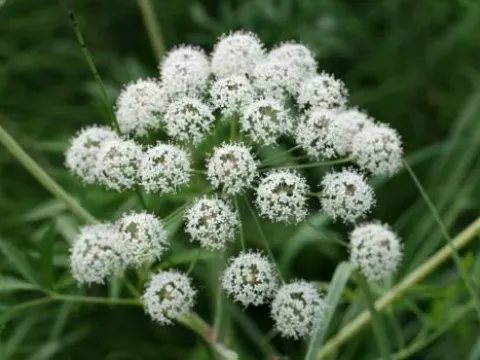
Ostericum
Ostericum
Ostericum is a perennial herbaceous plant belonging to the Apiaceae family. Its seeds typically require a cold stratification period to break dormancy, making late autumn or early spring the ideal times for sowing in field conditions.
What the section contains


Ostericum
Sowing should be done at a shallow depth of approximately 1–2 cm. The soil needs to be finely prepared and kept consistently moist to ensure the tiny seeds germinate properly, as they are sensitive to surface desiccation.
During the first year, the plant focuses on developing a robust basal rosette of leaves. The flowering stem usually emerges only in the second year of growth. Planting density should allow about 30–40 cm between individual plants to promote healthy development.
Ostericum is known for its cold hardiness, adapting well to temperate climates. While it can grow in full sun, it performs best in partial shade, mimicking the conditions of forest edges and meadows where it naturally originates.
Pre-soaking seeds in growth promoters can significantly improve germination rates, leading to more uniform stands. This is a common practice for gardeners and farmers looking to optimize their production cycle.
The ideal soil for Ostericum is well-drained, fertile, and slightly loamy. Good aeration and a neutral pH balance are crucial, as waterlogged conditions often lead to root rot, which is the primary cause of failure in cultivation.
Native to various parts of East Asia and Siberia, the plant thrives in moist environments. Providing a steady supply of moisture during the peak growing season is essential for achieving high biomass yields.
Organic matter, such as compost or well-rotted manure, should be incorporated into the soil before planting. This helps improve soil structure and water retention, providing a stable foundation for the perennial root system.
While the plant is hardy, it benefits from protection against strong, drying winds. Planting near natural windbreaks or in sheltered spots can enhance the quality of the leaves and stems.
Regular maintenance, including shallow cultivation to remove competing weeds, is vital. Weeds can easily outcompete the young Ostericum seedlings during the early stages of establishment.
Ostericum is susceptible to fungal issues, particularly powdery mildew and root rot, which are often exacerbated by poor air circulation or excessive humidity. Maintaining proper spacing is the best cultural control method.
Insect pests like aphids and plant bugs can cause damage to tender foliage and inflorescences. Integrated pest management, involving beneficial insects or soft soaps, is recommended over heavy chemical use.
Soil-dwelling pests, including wireworms, pose a risk to the root system. Proper site selection and crop rotation practices are essential to keep the populations of these pests at manageable levels.
Nematodes can also impact growth, potentially leading to stunted plants and root galls. Rotating Ostericum with non-host crops is a proven strategy to mitigate this long-term risk in professional herb gardens.
Routine monitoring is key; early detection of any discoloration or wilted foliage allows for quick intervention, which is necessary to prevent the loss of an entire batch of plants.
The harvest is primarily targeted at the roots, which contain high concentrations of bioactive compounds. Roots are best harvested in the autumn of the second or third year when they have reached maximum maturity.
Post-harvest, roots must be washed thoroughly and dried at temperatures not exceeding 45°C. Excessive heat can degrade the essential oils and medicinal components that give the plant its value.
Leaves are collected during the flowering period when their physiological activity is at its peak. Drying should occur in a shaded, well-ventilated area to protect the leaves from UV-induced degradation.
Stored material should be kept in airtight containers away from direct sunlight and humidity. Under proper conditions, the dried herb can retain its quality and potency for up to two years.
Given its pharmacological potential, Ostericum is becoming an interesting niche crop for medicinal herb growers. Focus on quality during the harvest process is critical for meeting market standards.