
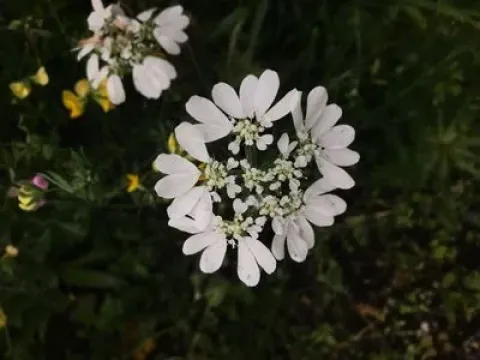
Orlaya grandiflora
Orlaya daucorlaya
Orlaya grandiflora is a charming annual plant belonging to the Apiaceae family, often referred to as the white lace flower. Seeds should be sown directly into the soil in late autumn or early spring as soon as the ground is workable.
What the section contains
Orlaya grandiflora
The seeds have a tough seed coat, which often requires a period of cold stratification or soaking in warm water for a few hours to ensure uniform germination. Planting depth should be approximately 1–2 centimeters in well-loosened soil.
As this plant develops a deep taproot, it is notoriously sensitive to transplanting. Therefore, direct sowing in the garden bed or using biodegradable peat pots that can be planted directly into the ground is highly recommended.
Spacing between plants should be maintained at about 20–30 centimeters to allow for proper air circulation and to prevent overcrowding, which can encourage fungal diseases.
Germination typically occurs within two to three weeks depending on soil temperature. Under optimal conditions, the plant will establish quickly and prepare for its vigorous flowering phase.
Orlaya thrives in full sun, where it produces the most abundant and sturdy blooms. While it can tolerate partial shade, the stems tend to become leggy and may require support to keep them upright.
The plant prefers light, well-drained soil, ideally with a slightly alkaline to neutral pH. It performs exceptionally well in sandy or gravelly soil, where moisture does not accumulate around the roots.
Once established, Orlaya grandiflora is moderately drought-tolerant. However, supplemental watering during prolonged dry spells is beneficial to maintain the quality of the white lace-like flowers throughout the season.
Fertilizing is generally unnecessary; in fact, over-fertilizing with nitrogen should be avoided as it encourages excess foliage at the expense of floral display. A light application of compost at planting time is usually sufficient.
Deadheading is optional; removing spent flowers can prolong the blooming period, whereas leaving them allows the plant to produce seeds and potentially reseed itself for the following year.
Orlaya grandiflora is generally robust and not heavily targeted by common garden pests due to its aromatic oils. Occasionally, aphids may appear on young shoots, which can be managed with insecticidal soaps or natural predators like ladybugs.
Powdery mildew can become an issue during periods of high humidity and poor airflow. Ensuring sufficient space between plants and planting in an open, breezy location significantly reduces the risk of fungal infections.
Root rot is the most common problem, almost always caused by poor soil drainage. Choosing a site with adequate drainage or amending heavy clay soils with organic matter and grit is the best preventative strategy.
Slugs and snails may browse on young seedlings during the spring. Implementing simple barriers or biological controls is usually enough to protect the early growth stages of the plant.
Overall, Orlaya is a low-maintenance plant that provides high aesthetic value with minimal intervention, making it a favorite for cottage gardens and naturalistic plantings.