
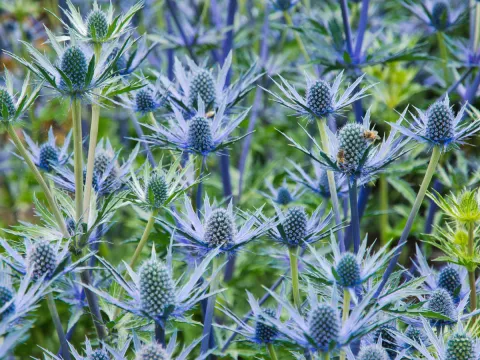
Oliver's eryngo
Eryngium oliverianum
Sowing seeds of Oliver's eryngo is most effectively done in the autumn directly into the open ground, as the seeds require a period of natural cold stratification to germinate.
What the section contains
Oliver's eryngo
If spring sowing is preferred, seeds must be subjected to artificial stratification in a refrigerator at approximately 4 degrees Celsius for at least 4 to 6 weeks.
For container-grown seedlings, sow in March using a light, well-draining potting mix and keep in a bright location with moderate moisture levels for optimal growth.
The germination process usually takes three to four weeks at room temperature, provided the seeds are kept in a stable environment with consistent light exposure.
Transplanting seedlings to their permanent garden location should be done carefully after the risk of frost has passed to avoid root disturbance of this perennial.
Oliver's eryngo, a member of the Apiaceae family, is a distinct perennial herb known for its striking metallic blue flower heads and sharp, spiky bracts.
The plant demands a full sun position, as insufficient light will result in weak, floppy stems and a lack of the signature intense blue color in the inflorescences.
Well-draining, sandy, or rocky soil is essential, as the species is highly sensitive to root rot if placed in heavy, waterlogged clay soils that stay damp too long.
It thrives in nutrient-poor conditions, which helps maintain the plant's compact growth habit and prevents it from becoming too leggy or losing its aesthetic appeal.
Once established, the crop is exceptionally drought-tolerant and requires minimal irrigation, making it a sustainable choice for low-maintenance garden landscapes.
Slugs and snails are the primary pests that target young foliage in early spring, and physical barriers or organic bait are recommended for effective population control.
Root rot is the most common disease, caused by excessive soil moisture and poor drainage, which can rapidly kill mature specimens if the site conditions are incorrect.
Powdery mildew may occur during seasons with high humidity or poor air circulation, necessitating thinning of the plants to improve airflow and reduce fungal risks.
Aphids can occasionally infest flower buds, though they rarely cause fatal damage, standard insecticidal soaps or neem oil applications are usually sufficient for control.
Regular sanitation, such as removing debris from around the base of the plant, is crucial to prevent the overwintering of pathogens that could harm the next season.
Harvesting for dried floral arrangements should occur once the flowers are fully opened and the blue pigment is at its peak, but before the seeds start to mature.
Cut stems should be bundled and hung upside down in a dark, dry, and well-ventilated room to ensure the stems dry straight and retain their structural integrity.
For seed collection, wait until the flower heads turn brown and begin to dry naturally on the stalk, then harvest carefully and dry further in breathable paper bags.
Always wear heavy-duty gloves when handling the plants, as the bracts are extremely sharp and can easily cause skin irritations or punctures during the harvest process.
In late autumn, cut the entire plant back to the base of the rosette to tidy the garden and prepare the perennial for its winter dormant period underground.