
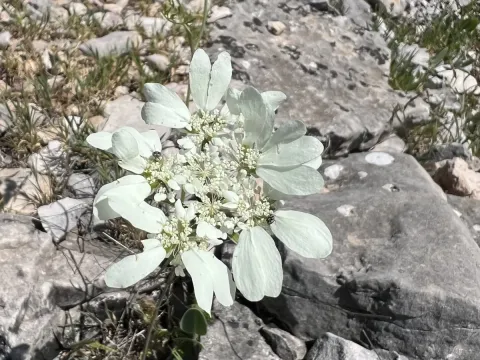
Orlaya grandiflora
Orlaya grandiflora
Orlaya grandiflora, commonly known as white laceflower, is an annual herbaceous plant belonging to the Apiaceae family.
What the section contains
Orlaya grandiflora
The seeds are typically sown directly into the soil in early spring after the risk of severe frost has completely passed.
For colder regions, starting seeds indoors or in a greenhouse several weeks before the last frost can provide a significant head start.
Seeds should be covered with a thin layer of soil and kept moist, as uniform moisture is essential for successful germination.
Proper thinning is required once the seedlings emerge to ensure each plant has enough space to develop its characteristic branching habit.
This species thrives in full sun exposure, which is necessary to maintain sturdy stems and promote profuse flowering throughout the season.
The ideal soil is well-drained, fertile, and slightly alkaline, mimicking the natural limestone-rich habitats of its origin in Southern Europe.
Once established, the plant shows a good level of drought tolerance, making it a low-maintenance choice for dry flower gardens.
It is important to avoid heavy, waterlogged soils, as these conditions significantly increase the risk of root rot and overall plant decline.
No intensive fertilization program is needed; in fact, poor to average soils are often preferred to prevent excessive vegetative growth.
Fungal diseases such as powdery mildew can become an issue if the plants are grown in conditions with poor air circulation or excessive humidity.
Aphids represent the primary insect pest, often clustering on the undersides of leaves and the developing flower buds during the growth phase.
Integrated pest management strategies should be employed to mitigate damage while protecting the beneficial insects that visit these white blooms.
Root pathogens may appear if the drainage is inadequate, leading to sudden wilting and the loss of the entire plant structure.
Maintaining a clean garden environment and removing debris helps prevent the buildup of inoculum for recurring seasonal diseases.
Orlaya grandiflora is highly valued in the floral industry for its lace-like, pure white inflorescences that serve as excellent filler material.
For fresh cut flowers, stems are harvested when the majority of florets are open, ensuring they have been hydrated prior to cutting.
The dried stems are also prized in artisanal arrangements, as they retain their structure and delicate appearance for a long duration.
Seed harvesting should be performed carefully, as the fruit segments possess small, hooked bristles that aid in natural dispersal.
Storage of the collected seeds must be in a cool, dry place to maintain viability for the subsequent growing season.