
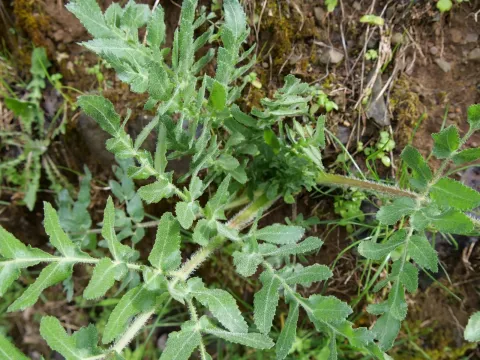
Opopanax
Opopanax
Sowing Opopanax (Opopanax chironium) requires careful seed preparation, as the seeds have low germination energy when sown directly into the soil. The optimal time for planting is early spring, once the soil has warmed up to 10–12°C.
What the section contains


Opopanax
To improve germination rates, it is common practice to stratify the seeds for several weeks in cold conditions. This mimics natural wintering, which helps break seed dormancy and ensures more uniform seedling emergence.
Seeds should be planted at a shallow depth of 1–2 centimeters, as small seeds have limited energy reserves to penetrate the soil surface. Maintaining consistent moisture in the upper soil layer is crucial until the seedlings are well-established.
For commercial cultivation, a row-cropping method with 60-centimeter spacing is recommended. This provides sufficient space for the development of the plant's robust root system and simplifies field maintenance operations.
Thinning should be performed at the 3–4 true leaf stage to ensure optimal plant density. Maintaining a distance of 30–40 centimeters between plants in a row is essential for proper air circulation and minimizing competition for nutrients.
Opopanax belongs to the Apiaceae family and is a perennial herbaceous plant with a deep, fleshy root. It thrives in open, sunny locations, as exposure to full sunlight is necessary to maximize the production of essential oils.
The plant prefers light, well-drained loamy soils. Waterlogging is detrimental to Opopanax and often leads to root rot, which can destroy an entire plantation, so proper field drainage is of the utmost importance.
The plant is highly drought-tolerant due to its deep root structure, which allows it to access water from deeper soil horizons. However, irrigation during critical vegetative stages is beneficial for achieving high biomass yields.
Moderate climates with well-defined growing seasons are preferred. In regions with harsh winters, protection measures such as light mulching are recommended to prevent the crown of the root from freezing.
Agronomic management includes regular inter-row cultivation to control weeds and improve soil aeration. The plant generally responds well to balanced organic and mineral fertilization applied before the flowering stage.
The primary agricultural product of Opopanax is the oleoresin, or gum resin, obtained through tapping the roots of mature plants. Harvesting typically begins in the 3rd or 4th year when the root system has matured sufficiently.
Yield depends significantly on the age of the plantation and the quality of field management. Economic viability is reached once the plants attain their peak productive stage, which is maintained for several years.
A healthy plantation can produce a consistent yield for 5 to 7 years. After this period, the productivity of the root systems usually declines, necessitating the rotation of fields and the establishment of new plantings.
It is vital to follow proper tapping procedures to avoid exhausting the plant. Over-tapping in a single season can weaken the individual plant and reduce its long-term viability and resin output.
Effective yield management requires careful timing of harvests and professional handling of the raw resin to ensure the quality required for the fragrance and pharmaceutical industries.
Opopanax is susceptible to various fungal diseases, especially in high-humidity conditions. Powdery mildew is a common issue that affects foliage, potentially reducing the plant's photosynthetic capacity.
Root rot, caused by Fusarium species, poses a significant threat if drainage is inadequate or if soil moisture levels remain consistently too high. Prevention through soil selection and proper drainage is the most effective defense.
Pests like the parsnip moth or various aphid species may target flowers and young shoots. Heavy infestations can lead to decreased seed production and impact the overall health of the entire crop stand.
Slugs and snails can cause damage to young seedlings during the early spring growth phase. Using natural barriers or physical exclusion methods can help protect young plants until they become more resilient.
An integrated pest management approach, including regular scouting and the use of targeted biological controls, is essential for maintaining a healthy and productive Opopanax plantation throughout the season.
Harvesting the resin of Opopanax is a labor-intensive process involving controlled tapping of the plant's roots. A shallow incision allows the sap to flow, which then solidifies into yellow-brown "tears" upon exposure to the air.
The solidified resin is collected manually after several days. It is crucial to perform this task in dry weather to prevent moisture contamination and to ensure the product remains clean for processing.
For ornamental or pharmaceutical use, the flowering umbels are harvested at the peak of bloom. Cutting is typically done in the early morning to capture the highest concentration of volatile aromatic compounds.
Post-harvest, the collected plant material must be dried in a well-ventilated, shaded area. Excessive heat should be avoided to prevent the loss of essential oils, which define the value of the raw material.
Finally, the resin is cleaned of debris and packaged in airtight containers. Proper storage in a cool, dry environment is necessary to preserve the characteristic aroma and quality of the final product.