
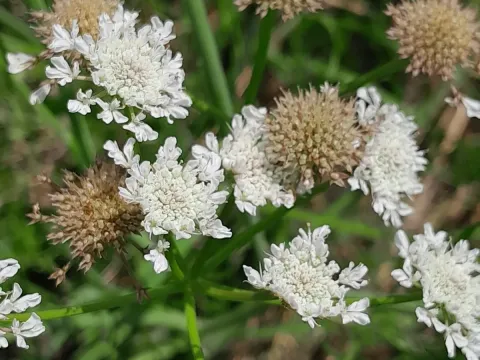
Oenanthe silaifolia
Oenanthe silaifolia
Oenanthe silaifolia, commonly known as narrow-leaved water dropwort, is a perennial herbaceous plant belonging to the Apiaceae family. It is naturally adapted to wetland ecosystems, specifically floodplains and seasonally inundated meadows, where it plays a role in the local botanical structure.
What the section contains
Oenanthe silaifolia
The crop thrives in moisture-retentive soils, preferring heavy clay or silty loams. Agronomic management requires consistent soil moisture, as the plant lacks drought tolerance and will suffer significantly if water levels drop below the required threshold for extended periods.
In terms of climate, it is a temperate-zone plant that demonstrates significant winter hardiness. It requires open exposure to light, although it can tolerate partial shading from taller vegetation in diverse meadow habitats provided that the water balance remains optimal for its root system.
Botanically, the plant features finely divided, carrot-like leaves and hollow stems that support compound umbels. The structure is designed to withstand periodic flooding, which is a critical evolutionary adaptation that defines its preferred growing environment and niche in agricultural grasslands.
In an agricultural context, it is utilized as part of permanent hay meadows. It contributes to the overall nutritive value of wild hay crops intended for cattle grazing, as long as it is harvested before the plants reach the lignified stage, which reduces palatability for livestock.
Fungal pathogens such as powdery mildew are the primary disease threats, particularly during warm and humid growing seasons. High humidity within the canopy facilitates the rapid spread of spores, potentially damaging the foliage and reducing photosynthetic efficiency.
Pest pressures primarily include carrot rust fly larvae, which feed on the roots of Umbelliferae species. This can lead to stunted growth and, in severe cases, the death of individual plants within the population if not managed through appropriate cultural practices.
Aphids are another recurring problem, colonizing the flower heads and tender stems. Their feeding weakens the plant and can serve as a vector for viral diseases, which significantly impacts the long-term sustainability of the stand in commercial meadow environments.
Management of these threats relies heavily on balanced meadow maintenance, including mowing regimes that disrupt pest life cycles. By controlling the height of the vegetation, farmers can minimize the impact of humidity-related pathogens.
Due to the potential for toxicity associated with the genus Oenanthe, strict quality control is essential during hay harvesting. Ensuring that the harvested biomass is free from toxic look-alikes is a fundamental requirement for safe forage production.