
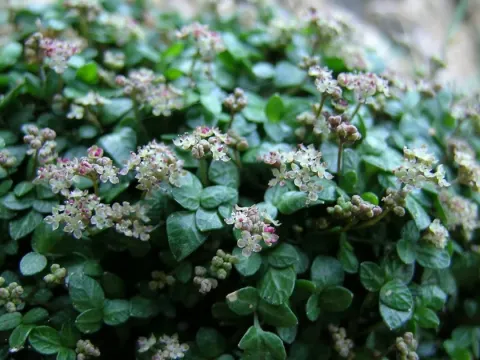
Naufraga balearica
Naufraga balearica
Naufraga balearica is a rare herbaceous plant classified within the Apiaceae family. It is not considered an agricultural crop in the traditional sense, but it remains a subject of intense botanical interest and conservation efforts due to its high level of endemism.
What the section contains
Naufraga balearica
The plant is native exclusively to the island of Mallorca, part of the Balearic archipelago. Its distribution is restricted to very specific rocky limestone crevices, which provide the stable, shaded environment necessary for its survival.
Biologically, the species has adapted to high-humidity, low-light niches within rock formations. It requires constant access to moisture trapped within the stone crevices and is highly sensitive to heat stress and fluctuations in the microclimate.
Soil requirements for the species are primitive, as it relies on small accumulations of mineral-rich substrate within the fissures of limestone rock. It does not tolerate heavy soil or standard agricultural fertilizers, which can be toxic to such specialized species.
Given its status as an endangered plant, there is no standardized agrotechnical method for cultivating it as a crop. Any successful propagation is strictly managed by botanical institutions to ensure the survival of the genetic diversity of the species.
The primary threat to the existence of Naufraga balearica is the degradation of its limited natural habitat. Infrastructure development and tourism on the island of Mallorca have fragmented the areas where these plants can thrive.
Climate change poses a significant risk to the species, particularly through the increase in prolonged drought events. As a moisture-dependent plant, the reduction of seasonal rainfall threatens the stability of its micro-habitats in the rock crevices.
Competition from invasive plant species creates pressure on the fragile population of Naufraga balearica. More resilient non-native plants often occupy the limited space, effectively crowding out the endemic species.
Potential threats from pathogens or pests are under constant study by conservationists. Small, isolated populations are particularly susceptible to genetic bottlenecks, making them less capable of resisting diseases that might otherwise be managed in more diverse populations.
Effective conservation efforts rely on protecting the existing locations from human interference and ensuring that environmental conditions are monitored. The plant serves as a critical indicator of the health of the Mediterranean rocky ecosystems.