
Gerard's hare's-ear
Bupleurum gerardii
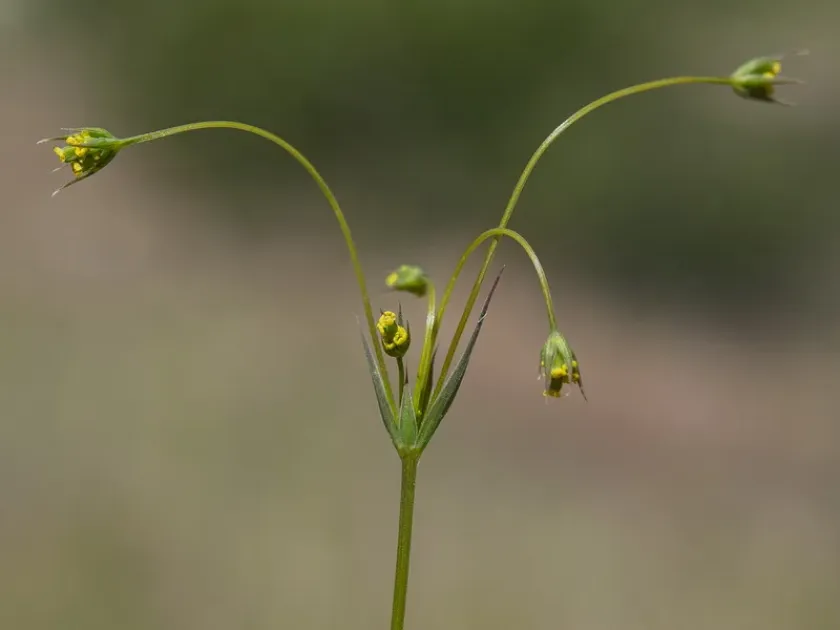
Description
Growing requirements
Gerard's hare's-ear (Bupleurum gerardii) is an annual herbaceous plant belonging to the Apiaceae family. It is characterized by a slender, branched stem that typically grows to a height of 10 to 40 centimeters.
The native habitat of this species is found primarily in Mediterranean regions, Southern and Central Europe. It thrives in open, sunny environments, often colonizing dry rocky slopes, calcareous meadows, and disturbed lands with good drainage.
Botanically, the plant is distinguished by narrow, linear leaves and compound umbels bearing small, yellow flowers. The plant completes its lifecycle within a single season, producing seeds that germinate during the following spring if conditions are optimal.
Cultivation requirements necessitate well-drained, nutrient-poor, or average-quality soils. The plant is highly drought-tolerant, meaning that artificial irrigation should be minimal to avoid root rot and other moisture-related physiological disorders.
Regarding economic utility, Bupleurum gerardii is studied for its chemical composition. Like many other species in the Bupleurum genus, it contains bioactive compounds such as saikosaponins, which are valued for their potential hepatoprotective and anti-inflammatory properties.
Main diseases and pests
Pathogens affecting this crop are mostly fungal, particularly those thriving in high-humidity or poorly ventilated conditions, such as powdery mildew. Proper plant spacing is essential to ensure adequate airflow and prevent the development of such diseases.
Pests typically include aphids and various sap-sucking insects that can weaken the plant and serve as vectors for viruses. Integrated pest management strategies, focusing on biological controls, are highly recommended to preserve the medicinal quality of the harvested biomass.