
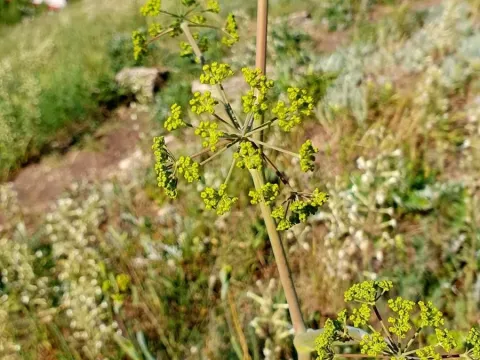
Tatar asafoetida
Ferula tatarica
Tatar asafoetida (Ferula tatarica) is a perennial herbaceous plant belonging to the Apiaceae family. It is naturally adapted to arid and semi-arid environments, thriving in desert-like conditions where survival depends on a deep taproot.
What the section contains
Tatar asafoetida
Botanically, the plant features a robust root system capable of accessing water at significant depths. The foliage is characterized by deeply divided, elegant leaves that emerge early in the season, allowing the plant to complete its cycle before peak summer heat.
The climate requirements for Ferula tatarica include high solar radiation and resistance to extreme temperature fluctuations. The plant is perfectly suited for regions with low humidity and continental weather patterns, making it highly drought-tolerant.
When it comes to soil, the species is quite undemanding but prefers well-drained sandy or sandy-loam soils. It shows a remarkable tolerance to saline conditions, which allows it to be grown in areas unsuitable for many other agricultural crops.
In terms of economic value, this plant is primarily targeted as a medicinal resource. It contains various coumarins and essential oils that are significant in traditional and modern medicine, contributing to its potential for niche agricultural production.
The primary threat to the successful cultivation of Ferula tatarica is root rot caused by improper soil moisture management. Poor drainage or excessive irrigation creates a waterlogged environment that leads to rapid fungal decay.
Common agricultural pests affecting the Apiaceae family, such as various leaf-eating beetles and larvae, can pose significant challenges. These pests damage the foliage and can lead to a drastic reduction in biomass and medicinal quality.
Soil-borne pests like wireworms are particularly dangerous as they target the essential root structures. Protecting the roots is crucial, as any damage here significantly reduces the plant's vigor and its ability to store secondary metabolites.
Fungal diseases like powdery mildew may arise under conditions of poor air circulation. Improving plant spacing and managing weed competition are essential agronomic steps to ensure the health of the plantation.
Integrated pest management is recommended for this crop. Due to its use in medicine, minimizing synthetic chemical input is preferred, focusing instead on crop rotation and maintaining an environment that promotes natural plant resilience.