
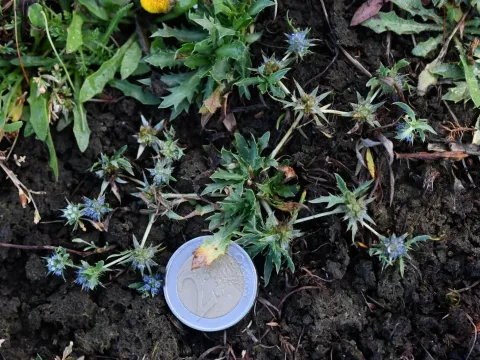
Eryngium viviparum
Eryngium viviparum
Eryngium viviparum is a unique herbaceous plant belonging to the Apiaceae family. It is known for its distinctive morphology and a specialized reproductive strategy that allows it to produce daughter plants on its inflorescences.
What the section contains
Eryngium viviparum
This species naturally inhabits humid meadows and areas with fluctuating water levels. Its lifecycle is finely tuned to these environmental oscillations, making it a highly specialized plant that requires precise conditions to thrive.
Regarding soil requirements, Eryngium viviparum demands consistently moist, nutrient-rich soil. It is critical to ensure that the medium does not dry out completely, while also preventing stagnant water that could lead to root asphyxiation.
The climate for this plant should be temperate with high humidity levels. It requires full sunlight to ensure proper energy levels for the development of its specialized vegetative reproductive structures.
Cultivation practices involve creating a stable environment that mimics its natural habitat. This includes regular moisture monitoring and ensuring the absence of invasive species that could outcompete this relatively slow-growing plant.
Major threats to Eryngium viviparum include the destruction of wetland habitats, land drainage for agriculture, and climate change that alters seasonal rainfall patterns.
In garden settings, the plant is susceptible to fungal infections such as root rot, which are often triggered by improper aeration and excessive soil moisture during cooler periods of the year.
Slugs and snails are the most significant pests, often targeting the succulent parts of the plant and hindering its ability to reproduce vegetatively and survive the season.
The lack of competitive strength makes this species highly vulnerable to encroaching weeds. If the site is not carefully maintained, the plant can be rapidly suppressed and eventually lost.
Effective management requires proactive pest control and regular inspections to ensure that the surrounding vegetation is kept low and does not interfere with the plant's light exposure.