
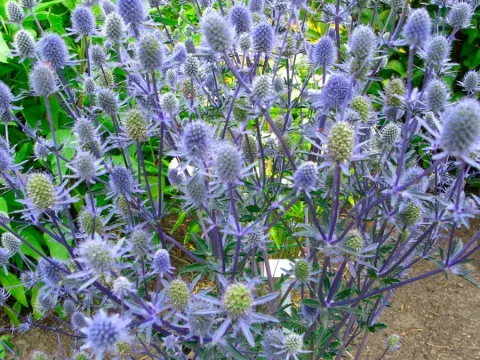
Eryngium tripartitum
Eryngium tripartitum
Eryngium tripartitum is a perennial herbaceous plant belonging to the Apiaceae family. In agricultural practice, seeds are typically sown in late autumn to allow for natural cold stratification during the winter months.
What the section contains
Eryngium tripartitum
If spring sowing is required, seeds must be stratified at temperatures between +2°C and +5°C for at least two months to break dormancy. Seeds should be sown at a depth of approximately 1 cm.
Vegetative propagation is achieved by dividing mature clumps. This is best performed in early spring or late summer, ensuring that each division has a portion of the root system and growth buds.
For commercial cultivation, plants should be spaced at intervals of 40–50 cm. This spacing ensures adequate air circulation, which is critical for reducing the incidence of fungal diseases in dense foliage.
Young plants develop slowly. Weed control is essential during the establishment phase, as the plant cannot compete effectively with aggressive weeds until the root system is fully developed.
Eryngium tripartitum thrives in full sun. Exposure to direct light is essential for the plant to develop its characteristic metallic blue coloration and robust stem structure.
The plant requires well-draining soil, preferably of a sandy or gritty texture. It is highly intolerant of waterlogged conditions, which often result in root rot and plant mortality.
This species is exceptionally drought-tolerant once established, thanks to its deep taproot. It is well-suited for cultivation in areas with limited water resources or on marginal land.
Soil fertility requirements are low. The plant actually performs better in lean soils; high nitrogen levels lead to lush green growth that lacks the desired aesthetic appeal and may cause lodging.
A neutral to slightly alkaline pH is ideal. If the soil is acidic, the application of lime or dolomite can improve growth conditions and support the development of strong flowering stems.
The primary commercial use of Eryngium tripartitum is in the floriculture industry, where it is highly prized as a durable and visually striking dried flower.
Production yields depend on plant density and site management. A well-maintained plantation can produce significant quantities of flower heads suitable for both fresh and dried markets.
The plant serves as a vital nectar source for bees and other pollinators, making it a valuable addition to agricultural landscapes to support local biodiversity.
It is widely used in landscape design and restorative horticulture. Its architectural form makes it an ideal choice for modern prairie-style plantings and xeriscaping projects.
Ongoing research explores the pharmaceutical potential of the plant, as various Eryngium species contain secondary metabolites with bioactive properties useful for herbal medicine.
Root rot is the most common threat, primarily caused by poor drainage or excessive humidity during the dormant season. Improving soil structure is the best preventative measure.
Powdery mildew may occur if air circulation is poor, particularly during hot and humid summers. Fungicidal treatments should be used if significant infestation is detected.
Aphids and spider mites are potential pests that target young foliage and stems. Integrated pest management, including monitoring and biological control, is recommended for plantations.
Bacterial diseases can occasionally affect the plant in overly humid environments. Maintaining clean field conditions and removing debris helps reduce the risk of outbreaks.
Consistent monitoring for pest activity allows for targeted interventions, minimizing the need for broad-spectrum chemicals and protecting beneficial insect populations.
Harvesting is performed during the peak of flowering when the bracts and flower heads have achieved their most intense coloration. Stems are cut near the base of the rosette.
For drying, stems are bundled and hung upside down in a dark, well-ventilated space. This method ensures the preservation of the plant's structural integrity and vibrant blue hue.
Seed collection takes place in late autumn after the flower heads have dried and turned brown. Seeds are threshed and cleaned before being stored in dry, cool conditions.
Post-harvest, the remaining foliage should be trimmed back to facilitate plant recovery and prepare the field for the upcoming growing season.
Properly cured dried stems can be stored for long periods, providing a consistent supply of quality material for floral designers and commercial retailers.