
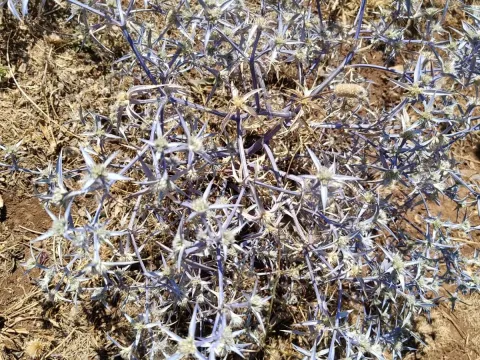
Eryngium triquetrum
Eryngium triquetrum
Sowing of Eryngium triquetrum should be carried out in early spring when the soil temperature consistently reaches 10-12 degrees Celsius. Proper seed stratification is recommended to ensure high germination rates, especially for batches that have been stored for a long period.
What the section contains
Eryngium triquetrum
Seeds are sown in rows with a spacing of approximately 50-60 centimeters. The seeding depth should be shallow, generally between 1 and 2 centimeters, as small seeds have limited energy reserves for deep emergence.
The seedling stage is characterized by slow development, which necessitates careful weed management in the first few weeks. Mechanical hoeing or manual weeding should be done to prevent competition for light and nutrients.
Once the seedlings reach the true leaf stage, thinning is essential to maintain optimal plant density. A spacing of about 25 centimeters between plants promotes healthy growth and ventilation.
The crop establishes well once the root system is anchored. By mid-summer, the plants typically show accelerated growth, forming a dense basal rosette that serves as the basis for future reproductive stages.
Eryngium triquetrum, a member of the Apiaceae family, thrives in full sun conditions. It is essential to select sites that receive at least 6-8 hours of direct sunlight daily to ensure the plant's structural integrity and biochemical development.
The plant is highly adaptive regarding soil types but prefers well-drained, sandy-loam structures. It is vital to avoid clay-heavy soils or areas prone to waterlogging, as these conditions are detrimental to the roots.
It displays remarkable drought tolerance, making it suitable for regions with erratic rainfall. While it can survive on minimal water, supplemental irrigation during extreme heatwaves can significantly increase biomass production.
Nutrient requirements are moderate; a balanced fertilizer application with an emphasis on potassium and phosphorus is recommended. Excess nitrogen should be avoided to prevent leggy growth and increased susceptibility to pests.
The species is climate-resilient, capable of withstanding various temperate conditions. It is well-adapted to environments where daily temperature fluctuations are frequent, provided that the soil drainage is adequate.
Root rot and crown rot represent the primary fungal threats, particularly in poorly drained soils. Improving soil aeration and maintaining correct spacing are the best preventive measures against these pathogens.
Pests like aphids and spider mites can colonize the foliage and flower stalks. Integrated pest management strategies, including the use of neem-based oils or soap sprays, are effective for smaller outbreaks.
Powdery mildew can occur during periods of high humidity and stagnant air. Ensuring adequate spacing between plants allows for improved airflow, which significantly reduces the risk of fungal infections.
Crop rotation is a cornerstone of protecting Eryngium triquetrum from soil-borne diseases. Avoiding monoculture for more than three years in the same plot helps break the cycle of pathogens.
Regular inspection of the basal leaves is necessary to detect early signs of stress or pest colonization. Early intervention is key to preventing the spread of diseases across the entire planting area.