


Reference · Crops
Fennel
Foeniculum Mill.
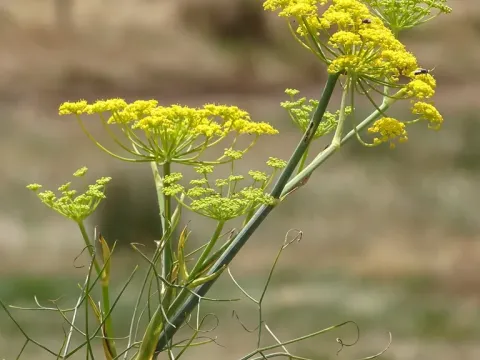
Fennel is a perennial herb of the Apiaceae family, most commonly cultivated as an annual crop in agricultural systems. The optimal sowing time in open ground occurs from late April to early May, once soil temperatures reach a stable 8–10 degrees Celsius.
1
items
What the section contains
Marketplace
Products in this section · 12


Fennel
For early production, a seedling method is frequently used, where seeds are sown in trays in late March. The seedlings are ready for transplanting into the field after 30–35 days, which significantly shortens the vegetation period and allows for an earlier commercial harvest.
Direct seeding in the field is performed in rows with spacing of 45–60 centimeters. The seeds should be planted at a depth of 2–3 centimeters, with consistent soil moisture being critical for uniform germination, as seeds may experience delayed sprouting due to their essential oil content.
Late autumn sowing is sometimes practiced in October before the first frost, allowing seeds to undergo natural stratification. This approach promotes earlier spring germination but requires careful site selection to avoid areas prone to waterlogging during the winter months.
Thinning the seedlings is an essential operation performed at the two-to-three leaf stage. The spacing between plants should be maintained at 20–25 centimeters to ensure proper development of the bulb in vegetable varieties or sufficient foliage in herb types.
Fennel is demanding regarding its growing environment, preferring well-lit locations with fertile, well-structured soil. The best results are achieved in loamy or sandy loam soils that have a neutral to slightly alkaline pH level.
The plant is heat-loving, showing optimal growth within a temperature range of 18 to 22 degrees Celsius. Development slows significantly if temperatures drop below 10 degrees, and spring frosts can be fatal to young, tender sprouts.
Fennel requires consistent soil moisture, especially during the bulb development phase and the rapid growth of leaf rosettes. Drought stress often leads to premature bolting and negatively impacts the flavor and texture of the final product.
Waterlogging must be avoided, as it can quickly lead to root rot and the proliferation of harmful pathogens. The best preceding crops for fennel are early vegetables that were heavily amended with organic matter, such as potatoes or cucumbers.
For vegetable fennel, hilling is a vital agronomic practice performed when the base of the stem reaches 3–5 centimeters in diameter. This process helps blanch the bulb, making it more tender and removing the potential bitterness.
Yield potential of fennel depends directly on the chosen variety and the level of management, particularly irrigation and nutrient supply. On average, commercial crops can produce between 20 and 35 tonnes per hectare under optimal planting densities.
When cultivating herb varieties for fresh aromatic leaves, the yield is measured by the total biomass of the foliage. Multiple cuttings can be performed throughout the season, significantly increasing the overall productivity of the field.
Stable yields are ensured by applying balanced doses of nitrogen, phosphorus, and potassium fertilizers. Excess nitrogen towards the end of the growth cycle should be avoided, as it promotes nitrate accumulation and reduces the storage life of the bulbs.
Effective weed control is a crucial factor for maximizing harvest weight, as fennel competes poorly with weeds during its early development stages. Regular weeding or cultivation is mandatory to ensure the crop has access to light and nutrients.
Genetic potential can be fully realized by using regionally adapted varieties resistant to premature bolting. Investing in high-quality certified seeds is the foundation for achieving superior output and profitability per hectare.
Fennel is susceptible to various fungal and viral diseases, with Cercospora leaf spot being one of the most common issues. In high-humidity conditions, powdery mildew can also occur, covering the foliage with a distinct white fungal layer.
Root rot represents a serious threat, especially when irrigation management is poor or crop rotation guidelines are ignored. Preventive measures include maintaining adequate spatial isolation from other Apiaceae crops, such as carrots or parsnips.
Major pests include aphids and carrot flies, which damage the delicate plant tissue and act as vectors for viral infections. Infested plants show stunted growth and a significant loss in commercial quality.
Mirid bugs can also attack the crop by feeding on the sap of young leaves, resulting in leaf deformation. Integrated pest management strategies, including biological controls and compliant insecticides, should be applied according to the specific regulations for vegetable crops.
- Strict crop rotation schedules.
- Consistent weed management practices.
- Active monitoring of pests during seedling stages.
- Usage of pathogen-free seed material.
The harvest of vegetable fennel is timed when the bulbs reach a diameter of 8–10 centimeters and feel firm to the touch. It is critical not to delay this process, as overgrown bulbs become fibrous and the plant will eventually initiate flower stem formation.
Harvesting should occur in dry weather conditions, cutting the bulb at the soil level or slightly below the surface. Foliage is typically trimmed to 5–10 centimeters from the base, and the product must be cooled immediately to preserve freshness.
For herb fennel, leaves are harvested selectively as needed by trimming the outer layers of the plant. Large-scale mechanical harvesting for processing uses specialized low-cut machinery, which requires a perfectly leveled field surface.
Post-harvest handling involves sorting by size and removing any damaged or yellowing parts. Market-ready produce must be cleaned of soil residues and packaged in ventilated containers to ensure proper airflow during transport.
Storage requires cool temperatures of 0–2 degrees Celsius and high relative humidity (around 95 percent). Under these specific conditions, commercial bulbs can maintain their quality for up to 2–3 weeks.