
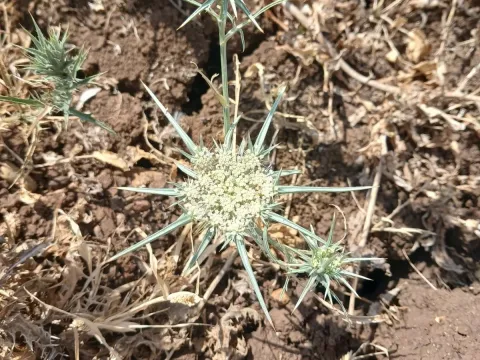
Exoacantha
Exoacantha
Exoacantha is a genus of flowering plants belonging to the Apiaceae (carrot) family. It is primarily distributed across the Eastern Mediterranean region, where it thrives in rugged and arid environments.
What the section contains

Exoacantha
The plant prefers rocky, calcareous, and well-drained soils. Its evolutionary development as a xerophyte allows it to withstand high temperatures and long periods of water scarcity.
Cultivation requires full sun exposure and protection from excessive moisture. Soil aeration is critical to prevent the development of root-borne pathogens in the root zone.
Climate requirements include mild winters and hot, dry summers. In regions with harsh winters, this plant is generally not suitable for outdoor cultivation without specific protection measures.
The plant exhibits distinct morphological traits, including specialized spiny bracts that characterize the genus. It is highly adapted to nutrient-poor substrates, making it a specialized crop for specific ecological niches.
The main threat to Exoacantha in agricultural settings is fungal rot caused by poor soil drainage. Maintaining a dry, well-ventilated root zone is the primary prevention strategy.
Like many species within the Apiaceae family, it can be susceptible to typical umbrella pests such as aphids or specific moth larvae that feed on foliage and buds.
Crop rotation is recommended to break the cycle of soil-borne pathogens. Avoid planting Exoacantha consecutively in areas previously used for other susceptible members of the carrot family.
Manual monitoring of the plants allows for early detection of pest infestations. Removing affected leaves is often sufficient for small-scale cultivation compared to chemical intervention.
Integrated pest management focusing on biological control is the most effective approach to maintaining plant health while ensuring the purity of any potential herbal extracts.