
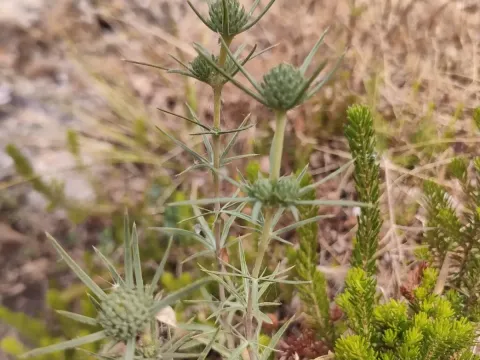
Eryngium tricuspidatum
Eryngium tricuspidatum
Eryngium tricuspidatum, a member of the Apiaceae family, is commonly propagated via seeds. Direct sowing in autumn is highly effective as the seeds require a period of cold stratification to break dormancy.
What the section contains
Eryngium tricuspidatum
For indoor spring sowing, seeds should be kept in a refrigerator for at least 4-6 weeks before sowing in individual pots. This process mimics natural winter conditions and significantly increases germination rates.
The seeds are sown at a shallow depth of approximately 0.5 cm in a well-draining, sterile potting mix. Keeping the soil consistently moist but not waterlogged is essential for initial growth.
Young seedlings must be handled with care, as the taproot system is sensitive. It is recommended to transplant them into the garden when they are small to avoid root disturbance.
Spacings of 40-50 cm are standard for field cultivation, ensuring the plants have sufficient airflow to prevent moisture-related issues.
This species thrives in full sun, which is critical for developing its characteristic metallic blue color and maintaining a compact, sturdy growth habit.
The ideal soil is sandy, stony, or well-drained loam. Eryngium tricuspidatum performs exceptionally well in poor, nutrient-deficient soils, making it an excellent choice for low-maintenance landscapes.
Drought tolerance is a primary feature of this plant. Once established, it requires little to no supplemental irrigation, as it is adapted to dry environmental conditions.
The plant dislikes high humidity and heavy soils. Adding coarse sand or gravel to the planting hole can significantly improve success rates in less than ideal garden soils.
In terms of temperature, it is hardy and capable of surviving mild frosts. In regions with harsh winters, a light covering of mulch is beneficial to protect the base of the plant.
Root rot caused by Phytophthora or Pythium species is the most significant threat to the health of Eryngium tricuspidatum, primarily triggered by excessive soil moisture.
Poor drainage is the most frequent cause of plant loss. If the soil remains damp for extended periods, the crown and roots will quickly succumb to fungal pathogens.
Although the spiny foliage provides good resistance to many pests, aphids may occasionally congregate on the flower buds during spring growth flushes.
Insecticide treatment is rarely needed if the plant is grown in optimal conditions, but manual removal or targeted sprays are effective if an infestation occurs.
Preventative measures include regular weeding to reduce competition and ensuring that the foliage stays dry to minimize the risk of powdery mildew outbreaks.
The primary use of this crop is in the dried flower industry. Harvest should take place just as the inflorescences are fully mature and show their best color.
Stems should be cut early in the day and hung upside down in a dark, dry, and airy room to preserve the structure and pigment of the flowers for professional floral arrangements.