
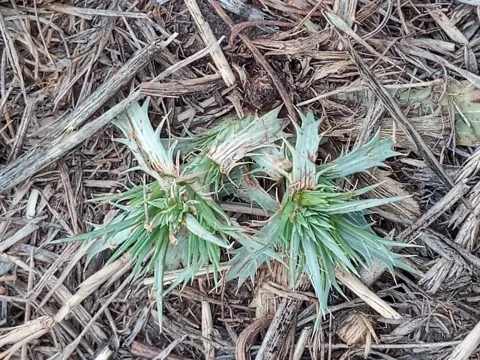
Eryngium rostratum
Eryngium rostratum
Eryngium rostratum, commonly known as a type of sea holly, belongs to the Apiaceae family. It is a perennial herbaceous plant recognized for its distinctive, spiky, and architecturally structured inflorescences, which distinguish it from typical field crops.
What the section contains
Eryngium rostratum
The plant is native to regions characterized by high levels of sunlight and relatively arid climates. It has evolved a deep taproot system, enabling it to thrive in nutrient-poor, sandy, or rocky soils that would be unsuitable for most conventional agricultural crops.
Regarding soil requirements, Eryngium rostratum prefers neutral to slightly alkaline pH levels and exceptional drainage. Waterlogging is the primary environmental factor that limits the plant's growth and health, as it promotes root decay and structural weakness.
The agronomic strategy for this culture focuses on ensuring deep soil preparation during the initial phase. While the plant is inherently resilient, targeted applications of phosphorus and potassium-rich fertilizers can significantly enhance the intensity of its flowering stage and improve the quality of harvested seeds.
The economic value of this species is primarily found in the pharmaceutical industry, where it is utilized for its potential medicinal properties, and in the ornamental market, as its drought-hardy nature and aesthetic value make it an excellent choice for low-maintenance landscaping.
The primary threats to the health of this culture are pathogens related to moisture, such as root rot and stem fungi. These conditions arise almost exclusively when planting densities are too high or when soil moisture levels exceed the plant's tolerance threshold.
Pests such as aphids and spider mites can become problematic during prolonged periods of dry weather. Producers should monitor the underside of the foliage regularly to ensure that pest populations do not reach economic threshold levels that would require chemical intervention.
Weed management is vital during the establishment phase, as the plant grows slowly in its early stages. Applying organic mulch or utilizing mechanical weeders between rows is recommended to minimize competitive stress on the crop.
Leaf spot infections can also occur if humidity remains high for extended periods, potentially reducing the plant's photosynthetic capacity. Promoting air movement through proper planting patterns is the most effective cultural control method.
Improper fertilization, particularly an over-reliance on nitrogen, may lead to excessive vegetative growth at the expense of reproductive development, effectively weakening the plant's natural resistance to environmental stress.