
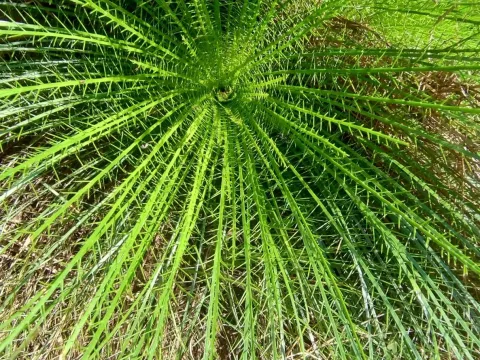
Eryngium pristis
Eryngium pristis
Eryngium pristis is a perennial herb belonging to the Apiaceae family. In agricultural practice, seeds are typically sown in late autumn, as the species requires natural stratification to ensure uniform germination during the following spring season.
What the section contains
Eryngium pristis
For spring sowing, seeds must undergo cold stratification at approximately 4 degrees Celsius for at least two months. Seeds are sown into loose, well-draining soil at a depth of 1-2 centimeters, maintaining sufficient space between rows to allow for optimal root development.
It is important to note that during the first year of life, the plant focuses primarily on developing a basal leaf rosette and a robust root system. The intensive growth of flowering stalks generally begins only in the second year, which dictates the long-term management strategy of the field.
The planting density is determined by the intended use of the crop: higher density is used for foliage production, while lower density is preferred for seed multiplication or root harvesting. Adequate light exposure is critical, as Eryngium is highly photophilic and does not tolerate competition for sunlight.
Irrigation during the initial seedling stage must be consistent but carefully controlled. Excess soil moisture during germination can lead to seed decay and the development of fungal infections, which are the leading causes of stand loss in newly established fields.
The plant exhibits significant ecological plasticity but performs best in full-sun conditions. Shading negatively affects the accumulation of secondary metabolites and can lead to leggy, weak stems that lack the structural integrity required for commercial harvesting.
Well-drained sandy or loamy soils with a neutral to slightly alkaline pH are considered ideal. Heavy clay soils, which restrict root expansion, must be amended with organic matter or sand to improve soil structure and ensure proper aeration of the deep root system.
Eryngium pristis is known for its extreme drought tolerance once established. Its deep taproot allows the plant to access moisture from sub-soil levels, making it a viable crop for regions where frequent irrigation is either unavailable or economically unfeasible.
Mineral fertilization should be applied at the beginning of the growing season, with a focus on phosphorus and potassium. Excessive nitrogen application should be avoided, as it stimulates vegetative growth that can compromise the plant's resistance to cold and reduce the quality of the harvested raw material.
The species is highly frost-hardy and survives winter conditions well without additional protection. However, farmers should monitor fields during early spring thaw cycles to prevent waterlogging, which can lead to crown rot and reduced plant survival rates after the winter dormancy.
Agricultural yields typically peak during the third and fourth years of the plant's life cycle. During this mature phase, plants form extensive clusters of flowering stems, which are the most valuable component for both pharmaceutical and ornamental industries.
Under optimal management, dry biomass yields can reach 2 to 4 metric tons per hectare. Variations in yield are usually attributed to regional precipitation patterns during the budding stage and the general soil fertility maintained throughout the growth cycle.
Harvest timing is critical for product quality: the aerial biomass is collected at the peak of the flowering period, while roots are harvested in late autumn. Harvesting at the correct physiological stage ensures the highest concentration of active compounds in the dried material.
Commercial applications are diverse, ranging from traditional medicine to specialized chemical manufacturing where the plant's anti-inflammatory and antiseptic properties are highly valued. Its potential as a dried flower crop also provides a stable secondary income stream for growers.
Economic viability is supported by the plant's longevity and relatively low maintenance costs after the first year. Sustainable cultivation practices help maintain soil health and allow for long-term production on the same land without significant yield degradation.
Root rot is the most serious threat to Eryngium pristis, typically triggered by poor drainage or overwatering. Once pathogens affect the root system, the decline is often irreversible, making preventative soil management and site selection the most important defense strategies.
Powdery mildew can occur in dense stands with poor airflow and high humidity. Management involves implementing wider spacing between plants and, if necessary, using authorized biological fungicides to suppress the spread of the disease within the field.
Pests such as aphids and spider mites may infest the foliage during hot, dry spells. Integrated pest management, which encourages natural predators, is the preferred approach, as the heavy use of synthetic chemicals is restricted when producing raw material for medicinal purposes.
Slugs and snails can cause damage to the tender basal rosettes during the wet spring months. Keeping the perimeter of the field clear of weeds reduces the habitat for these pests and serves as a simple but effective cultural control measure against plant damage.
Viral diseases can be transmitted by insect vectors, highlighting the importance of using high-quality, certified seeds. A strict crop rotation program that excludes other Apiaceae family members helps break the disease cycle and lowers the overall pest and pathogen pressure on the site.
The aerial biomass is harvested using tractor-mounted mowers at the peak of the blooming stage. Rapid transportation to the drying facility is essential to prevent oxidation of essential oils and to ensure that the material maintains its potency and desired sensory properties.
Drying is performed in shaded, well-ventilated structures or industrial drying chambers at temperatures not exceeding 45 degrees Celsius. Careful temperature control is vital to prevent the loss of aromatic compounds that define the quality of the raw medicinal product.
Roots are harvested using specialized machinery that lifts the plant and the root system from a depth of up to 30 centimeters. The harvested roots must be cleaned immediately to remove soil and contaminants, ensuring a high-purity product for the end user.
Post-harvest handling includes grading, the removal of any woody stems or impurities, and packaging. Adherence to strict hygiene standards during these processes is required to meet the quality specifications of the pharmaceutical and cosmetic industries.
Proper storage is the final step in maintaining product quality. Storing the material in a cool, dark, and dry environment prevents the growth of mold and moisture accumulation, ensuring the shelf life remains compliant with commercial requirements until the material is sold.