
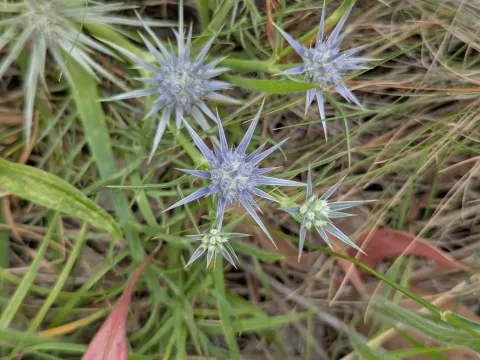
Eryngium ovinum
Eryngium ovinum
Eryngium ovinum is a perennial herbaceous plant belonging to the Apiaceae family. Successful cultivation requires careful planning regarding the timing of sowing, as this species typically benefits from environmental cues that trigger germination.
What the section contains
Eryngium ovinum
Seeds should be sown in the fall or early spring, often benefiting from a period of cold stratification to break dormancy. Choosing the right substrate, which should be well-draining, is essential to prevent seed rot before germination occurs.
The sowing depth should be kept shallow, approximately 1 to 2 centimeters, to allow for optimal access to light and moisture balance. Proper spacing is crucial, with row intervals of 40–50 centimeters being recommended to ensure sufficient room for plant development.
Seedlings initially prioritize the growth of a robust taproot system, which is a characteristic strategy for plants native to arid or semi-arid environments. During this establishment phase, consistent but controlled moisture is necessary for seedling survival.
Once established, the plant becomes quite hardy and starts developing its characteristic foliage rosette. Proper management during the first year of growth determines the plant's long-term vigor and overall productivity in subsequent seasons.
Eryngium ovinum thrives best in locations with full sun exposure, as high light intensity is necessary for the development of its characteristic blue-hued inflorescences. It is well-adapted to open areas with minimal shading.
Soil requirements are relatively modest, with the plant favoring light, sandy or loamy textures that provide excellent drainage. Heavy, waterlogged soils are detrimental to the root system and should be avoided to prevent root diseases.
The crop is highly drought-tolerant once established, making it suitable for regions with limited rainfall. Efficient water use makes it an excellent candidate for sustainable agriculture and areas where irrigation is costly or restricted.
Regular maintenance involves keeping the field free of weeds, which could otherwise compete for nutrients and light. Hoeing between rows helps improve aeration and soil structure, promoting healthier growth of the main crop.
- Full sun exposure for optimal coloration.
- Well-drained, sandy-loam soil.
- Low water requirements after establishment.
- Consistent weed management to reduce competition.
The economic value of Eryngium ovinum lies primarily in its utility as a medicinal herb and its aesthetic appeal in the floral industry as a long-lasting dry flower. Yield depends on optimal management during the blooming period.
Harvesting for medicinal purposes is best conducted during the peak flowering stage when active compounds are most concentrated. Harvesting methods should be careful to avoid damaging the crown of the plant to allow for regrowth.
For ornamental purposes, the flower heads are harvested when fully developed and dried in controlled conditions. This ensures that the structural integrity and color of the inflorescences are maintained for commercial sale.
Seed harvesting requires precision, ensuring the seeds are fully mature before collection. Cleaning and drying the seeds under proper conditions ensures high viability for future planting and market demand.
Maximizing yield involves careful monitoring of soil nutrients and potential pests throughout the growing season. Efficient harvest and post-harvest handling are essential for maintaining the high quality expected in the niche herb market.
Eryngium ovinum is generally robust but can suffer from root rot if drainage is insufficient. Keeping the crown of the plant dry is a key preventive measure against fungal soil-borne diseases.
In humid conditions, powdery mildew may occasionally occur, especially if there is poor air circulation between plants. Maintaining proper spacing and removing dense debris around the plants helps to mitigate these risks.
Common agricultural pests such as aphids or certain beetles may occasionally target the foliage or floral stalks. Implementing integrated pest management (IPM) strategies, including biological controls, is preferred over chemical interventions.
Weed control is not only about nutrient competition but also about limiting habitats for potential pests that might use neighboring weeds as intermediate hosts. Clean fields significantly reduce the pressure from insect populations.
If chemical protection is deemed necessary, it should be done with strict adherence to application safety and pre-harvest intervals. Prioritizing healthy soil conditions remains the most effective long-term defense against crop threats.