
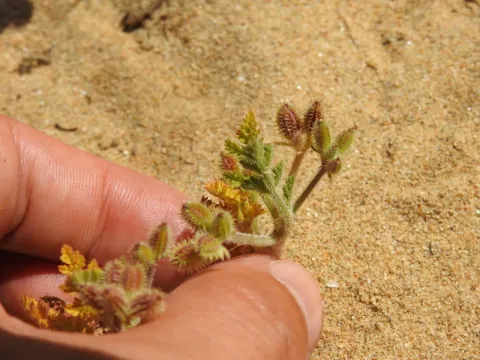
Lesser carrot
Daucus minusculus
Lesser carrot (Daucus minusculus) is a unique member of the Apiaceae family. Unlike common carrot varieties cultivated for mass production, this species maintains specific wild-type characteristics that make it highly resilient in its natural habitat.
What the section contains
Lesser carrot
The plant originates from Mediterranean and Middle Eastern regions, where it has evolved to thrive in arid and rocky landscapes. Its evolutionary path has favoured survival traits, such as efficient water uptake and high tolerance to intense solar radiation.
Botanically, Daucus minusculus exhibits a slender, taproot system and finely dissected, feathery leaves. The stem is generally pubescent, with inflorescences forming characteristic umbels that are essential for seed propagation and biodiversity support.
Optimal growth conditions require well-drained, sandy or gravelly soils with low nutrient retention. Excessive organic matter or fertilizer application can often lead to disproportionate vegetative growth, reducing the quality and vigor of the root system.
For agricultural purposes, this plant requires minimal irrigation, mimicking its natural rainfall patterns. It performs best in open, sunny fields where air circulation is excellent, preventing the accumulation of humidity around the foliage.
The most significant threat to the lesser carrot is the carrot rust fly (Psila rosae). This pest is highly attracted to the specific chemical compounds released by the foliage, and its larvae are capable of causing severe damage to the root development.
Fungal pathogens such as Alternaria dauci pose a significant risk, particularly during periods of high humidity. These pathogens manifest as necrotic leaf spots that can rapidly spread, leading to defoliation and a total loss of photosynthetic capacity.
Effective management involves the implementation of row covers early in the season to physically prevent adult insects from laying eggs. Once established, the population must be monitored closely to ensure that larvae do not compromise the taproot.
Cultural practices, such as deep autumn plowing, are highly effective in disrupting the life cycle of pests that hibernate in the soil. By exposing the pupae to lower temperatures and avian predators, the infestation pressure for the following season is significantly reduced.
Integrated pest management strategies should focus on crop rotation and the maintenance of hedgerows to support natural predators of carrot pests. Avoiding mono-cropping and ensuring diverse spatial arrangements are key to preventing large-scale disease outbreaks.