
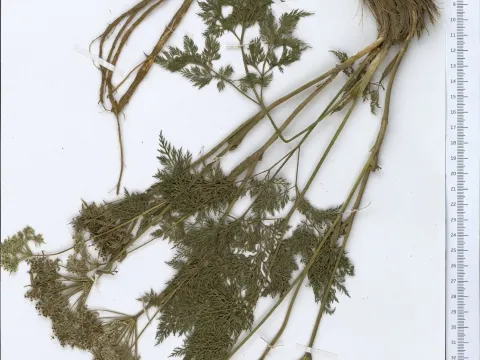
Ligusticopsis
Ligusticopsis
Ligusticopsis belongs to the Apiaceae family and requires specific attention during the sowing process. Seeds often exhibit a prolonged dormancy period, which necessitates cold stratification to significantly improve germination rates.
What the section contains

Ligusticopsis
The optimal time for sowing is late autumn or early spring when the soil retains sufficient moisture. Seeds should be planted in rows at a shallow depth of no more than 2 centimeters to ensure healthy sprout emergence.
Proper soil preparation is crucial; the seedbed must be finely tilled and entirely free of weeds. High-quality, viable seeds are essential for establishing a uniform and productive crop stand.
Planting density depends on the production goal: when grown for seed, rows should be spaced 45–60 cm apart. This spacing ensures adequate light penetration and air circulation, which are vital for plant health.
During the initial growth stages, Ligusticopsis develops slowly. Therefore, consistent weed control is necessary during the first few months to prevent competition and ensure the young plants thrive.
Ligusticopsis thrives in well-drained, sandy loam or light loam soils with a neutral pH level. Waterlogged conditions must be avoided as they lead to root rot and can destroy the entire plantation quickly.
The crop is highly adapted to alpine and mountain climates, demonstrating excellent winter hardiness. It prefers regions with moderate summer temperatures and distinct seasonal changes for optimal metabolic activity.
While the plant loves sunlight, in regions with extreme summer heat, partial shade during peak hours can prevent overheating and stress, maintaining better leaf quality throughout the growing season.
Soil fertility should be managed through organic matter incorporation prior to planting. Excessive nitrogen fertilization should be avoided as it often encourages vegetative growth at the expense of root development.
Regular inter-row cultivation is a mandatory agronomic practice. It promotes aeration in the root zone, which is critical for the healthy expansion of the main taproot during the vegetation period.
The yield of Ligusticopsis depends heavily on the plant's maturity and adherence to cultivation standards. Maximum biomass of the roots is typically achieved in the second or third year of growth.
Intensive farming practices allow for stable yields of high-quality dry root matter. Successful cultivation is marked by consistent growth and high active ingredient content within the harvestable roots.
The root system of a mature plant can reach significant mass, making the crop a valuable commodity for specialized agricultural producers focused on medicinal or aromatic raw materials.
Seed production is another vital economic component for growers. Properly managed seed plants can yield high volumes of quality seeds, which are highly sought after by other producers for propagation.
Operational efficiency is key to profitability. Utilizing mechanized harvesting equipment is highly recommended to reduce labor costs and minimize physical damage to the raw product during extraction.
Like many members of the Apiaceae family, Ligusticopsis is susceptible to fungal diseases such as powdery mildew, especially under high humidity or poor ventilation conditions in dense stands.
Insect pests, such as the carrot rust fly or other umbellifer-specific moths, can damage leaves and flowers, directly impacting both vegetative growth and seed production if not monitored.
Crop rotation is the most effective preventative measure. Avoiding the planting of Ligusticopsis in fields previously occupied by other Apiaceae species is critical to preventing soil-borne pathogen buildup.
When pest or disease outbreaks occur, integrated pest management including biological controls is preferred, particularly for crops destined for the pharmaceutical or nutraceutical markets.
Constant field monitoring and the prompt removal of infected plants are necessary to contain disease clusters and protect the overall health and vigor of the entire harvest area.
Harvesting usually takes place in autumn when vegetative activity decreases and the plant channels its energy reserves into the root system. This is the period of peak quality for the raw materials.
Mechanical harvesters or tractor-mounted digging tools are used to lift the roots from the soil. The process must be gentle to prevent breakage, as damaged roots lose value and are prone to spoilage.
After extraction, roots must be cleaned of soil and debris under running water. Any damaged or malformed sections are removed to ensure the final product meets commercial quality standards.
Drying should occur in well-ventilated, shaded areas or industrial dryers at temperatures not exceeding 45 degrees Celsius. This preserves essential oils and volatile compounds within the root tissue.
Once dried to the correct moisture content, the product is sorted and packaged in airtight containers. Proper storage in a cool, dry place is essential to prevent mold growth or pest infestation.