
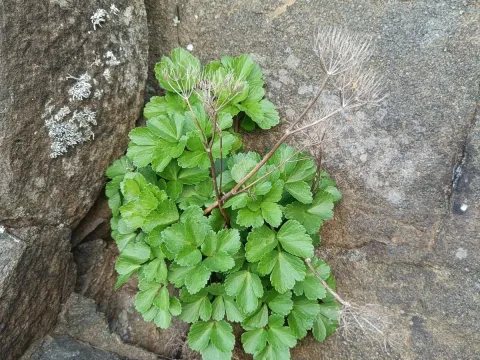
Ligusticum
Ligusticum
Sowing Ligusticum should typically occur in early spring once soil temperatures reach 5–8 degrees Celsius. Because the seeds often exhibit dormancy, a cold stratification period is essential to ensure a high germination rate and uniform plant emergence.
What the section contains


Ligusticum
Seeds should be planted at a shallow depth of 1–1.5 centimeters. Deeper sowing often results in poor seedling establishment, as the small seeds lack the energy to push through a thick layer of soil.
Row spacing is recommended at 45–60 centimeters to facilitate mechanical weed control and maintain airflow within the canopy. This spacing is vital for the development of healthy, dense leaf rosettes.
Fall sowing is also a viable option in many climates. By sowing in late autumn, the seeds undergo natural overwintering in the soil, which leads to earlier germination during the first warm days of spring.
Precise seed placement is critical for uniform crop stands. Using a precision seeder can significantly improve yield outcomes compared to broadcast sowing methods.
Ligusticum is a perennial herbaceous plant belonging to the Apiaceae family. It is naturally adapted to cool, moist environments, often found in mountain regions or high-latitude meadows.
The ideal soil for this culture is deep, well-draining, and rich in organic matter. While the plant thrives in moist conditions, it is highly susceptible to root rot if water sits in the root zone for too long.
The climate should be temperate, as the plant does not tolerate extreme heat or prolonged drought. Providing some shade during the hottest hours of the day can help maintain plant vigor and essential oil quality.
Soil structure should be loose and friable. On compacted soils, the plant fails to develop its characteristic deep taproot, which is the primary component of its economic value.
Regular monitoring of soil pH is necessary, as Ligusticum performs best in slightly acidic to neutral soils. Proper nutrient management, focused on potassium and phosphorus, supports robust growth.
Like many members of the Apiaceae family, Ligusticum is prone to infestation by the carrot fly. This pest can cause significant damage to the roots, rendering the harvest commercially unviable.
Fungal diseases such as powdery mildew and various leaf spot pathogens can appear during periods of high humidity. Proactive monitoring and improved drainage are the most effective management strategies.
Aphids can target young leaves during the early vegetative stages, causing curling and stunted growth. Biological control methods or soft insecticides are preferred to maintain the plant's quality for medicinal use.
Proper sanitation is critical in the field. Removing diseased plant matter promptly helps break the disease cycle and prevents the accumulation of soil-borne pathogens over multiple seasons.
Crop rotation is essential for long-term health. Never follow carrots, parsnips, or other Apiaceae crops with Ligusticum to prevent the buildup of host-specific pests and diseases.
Ligusticum is harvested primarily for its roots, which are utilized in both the medicinal and flavoring industries. The aromatic properties and active compounds are concentrated in the root system.
Harvesting is typically done during the plant's second year of growth. The best time for collection is in late autumn, just as the leaves begin to senesce and go dormant, ensuring maximum potency.
Mechanical harvesters or specialized ploughs are used to lift the roots from the soil. Once lifted, roots are washed to remove any adhering dirt or debris to ensure a clean final product.
Drying must be conducted at low temperatures to preserve the delicate essential oils. Controlled air circulation at 40–45 degrees Celsius is generally considered the industry standard.
- Harvesting during the dormant stage.
- Thorough washing to remove soil.
- Slicing roots to facilitate uniform drying.
- Drying under controlled, low-temperature conditions.
- Sealed storage to protect aromatic properties.