
Villars' chervil
Chaerophyllum villarsii
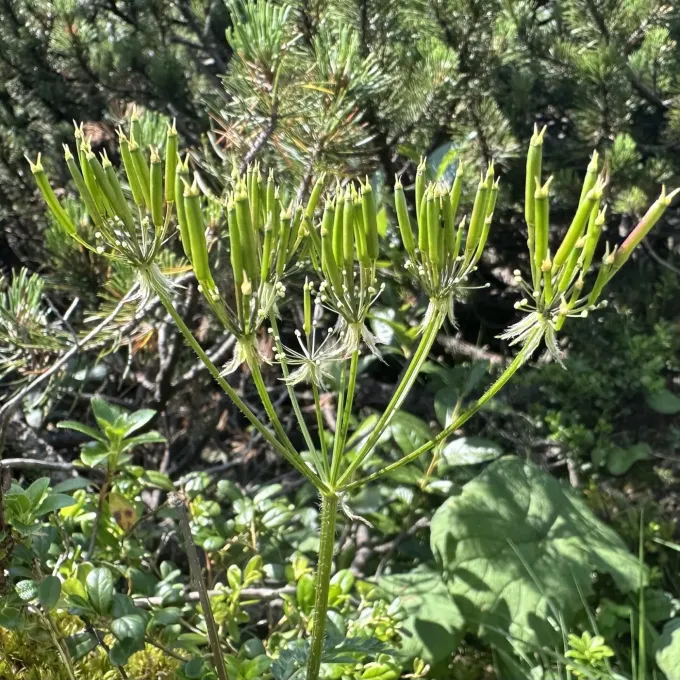
Description
Sowing dates
Villars' chervil is a perennial herbaceous plant belonging to the Apiaceae family. Its cultivation requires careful attention to seed preparation, as the seeds have a dormant phase.
Stratification is essential for successful germination. Seeds should be kept in cold, moist conditions for several weeks before planting to break their natural dormancy cycle.
Sowing is typically performed in late autumn or early spring. The seeds are placed at a shallow depth of approximately 1-2 centimeters in well-drained, fertile soil to ensure good contact.
Row spacing should be maintained at about 50 centimeters to prevent overcrowding and allow for mechanical maintenance during the growing season as the plants develop.
The first year is primarily dedicated to the development of a strong rosette of leaves. The plant establishes a robust root system before producing taller flowering stalks in subsequent years.
Growing requirements
This crop thrives in soils that are rich in organic matter, preferring a neutral or slightly alkaline pH level. It performs best in light to medium-textured soils with excellent drainage.
Villars' chervil is relatively adaptable regarding lighting, performing well in full sun or light shade, which makes it suitable for diverse agricultural environments.
Water management is crucial during the early stages of growth. Consistent soil moisture promotes healthy leaf development, while preventing waterlogging is necessary to avoid root diseases.
Temperature tolerance is high, as the species is adapted to temperate mountain climates. It can survive harsh winters, making it a reliable perennial option for suitable regions.
Moderate fertilization with balanced NPK fertilizers in early spring helps boost the biomass yield, providing the necessary nutrients for the second-year reproductive cycle.
Main diseases and pests
Fungal diseases are the primary threats to the health of the plants, particularly in areas with high humidity levels and poor soil ventilation.
Powdery mildew often attacks the leaves, covering them in a dusty white film. This significantly reduces the photosynthetic efficiency of the crop and affects overall vitality.
Root rot is a major risk in compacted or waterlogged soils. Ensuring good field drainage is the most effective preventative measure against this type of fungal damage.
Pests such as aphids and various larvae of umbellifer-feeding insects can cause significant damage to the floral stalks and soft tissues, leading to yield loss.
- Implementing systematic crop rotation to break pest lifecycles.
- Maintaining field hygiene by removing decaying plant matter.
- Regular monitoring for signs of localized aphid infestations.
Harvesting
The harvest strategy for Villars' chervil depends on whether the crop is being grown for its leaves, roots, or seed production for future seasons.
Leaves are typically harvested just before the plant enters its full flowering phase to ensure the maximum concentration of essential oils and plant compounds.
Seed harvesting should occur once the flower heads begin to dry and change color. This process requires timing to prevent premature seed shedding in the field.
Drying is performed in shaded, airy conditions to preserve the quality of the raw material. Excessive heat and direct sunlight must be avoided to keep the product potent.
After reaching the desired moisture content, the product should be stored in clean, airtight containers in a cool and dry location to maintain its shelf life for processing.