
Bulbous water hemlock
Cicuta bulbifera
Description
Growing requirements
Bulbous water hemlock (Cicuta bulbifera) is a herbaceous perennial plant belonging to the Apiaceae family. Native primarily to North America, it is naturally adapted to moist environments, such as marshes, swamps, and shorelines.
The plant thrives in nutrient-rich, wet soil conditions. It is typically found in wetlands with high water tables, where the substrate remains consistently saturated throughout the growing season, often associated with muddy or peaty soils.
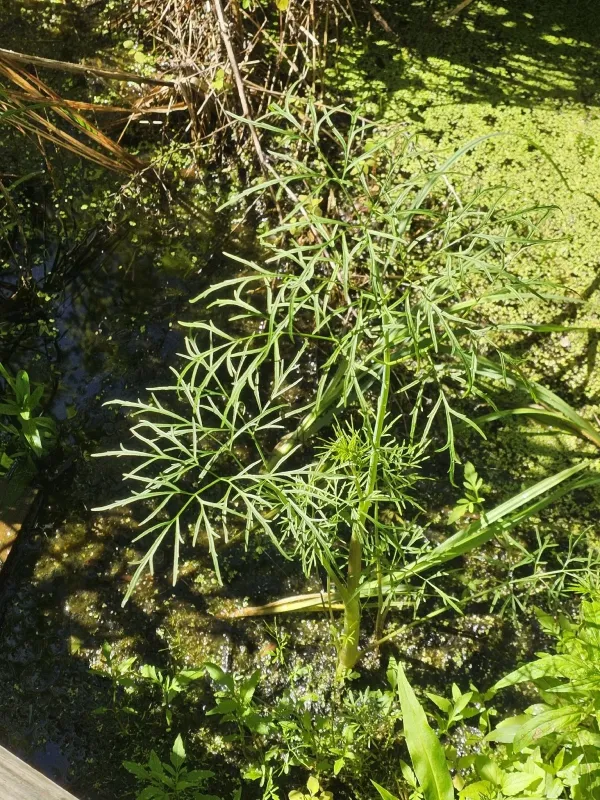
Botanically, it is distinguished by the production of small bulblets in the leaf axils, which serve as a primary mechanism for dispersal and propagation. The plant features delicate, fern-like leaves and hollow stems that grow up to a meter in height.
Environmental requirements for Cicuta bulbifera focus on high humidity and moisture availability. It does not possess drought-tolerance mechanisms, making it strictly a wetland species that flourishes in stable hydrological regimes.
From an agricultural standpoint, it is considered a dangerous weed. While it holds no crop value, its presence is a significant indicator of wetland health, though it poses severe risks to livestock management in nearby grazing zones.
Main diseases and pests
The primary concern regarding this species is its intense toxicity. All parts of the plant contain cicutoxin, a potent neurotoxin that can cause lethal poisoning in humans and livestock if ingested even in small quantities.
While the species is generally robust, it can be susceptible to typical fungal diseases found in the Apiaceae family, such as powdery mildew, though these rarely have a significant impact on its population density.
Herbivorous insects generally avoid this plant due to its chemical defense mechanisms. This lack of natural herbivory, combined with its vegetative reproduction via bulblets, allows the species to spread rapidly in suitable habitats.
Management of the bulbous water hemlock requires protective gear to prevent skin contact with the sap. Manual removal should be performed before the plant produces bulblets to prevent further spread through water currents.
Chemical control is often necessary for managing dense infestations. Systemic herbicides applied during the early growth stage are the most effective method, provided that strict environmental precautions are taken to protect aquatic ecosystems.