
Spotted water hemlock
Cicuta maculata
Description
Growing requirements
Spotted water hemlock (Cicuta maculata) is a highly poisonous herbaceous perennial plant belonging to the Apiaceae family. In an agricultural context, this species is treated as a major weed hazard that poses a lethal threat to livestock and humans, requiring rigorous management strategies on arable land.
Native to North America, this plant is typically found in wet meadows, marshes, and along the banks of streams or drainage ditches. It thrives in soils that remain consistently moist, making it a frequent colonizer of poorly drained agricultural areas and riparian zones near cultivated fields.
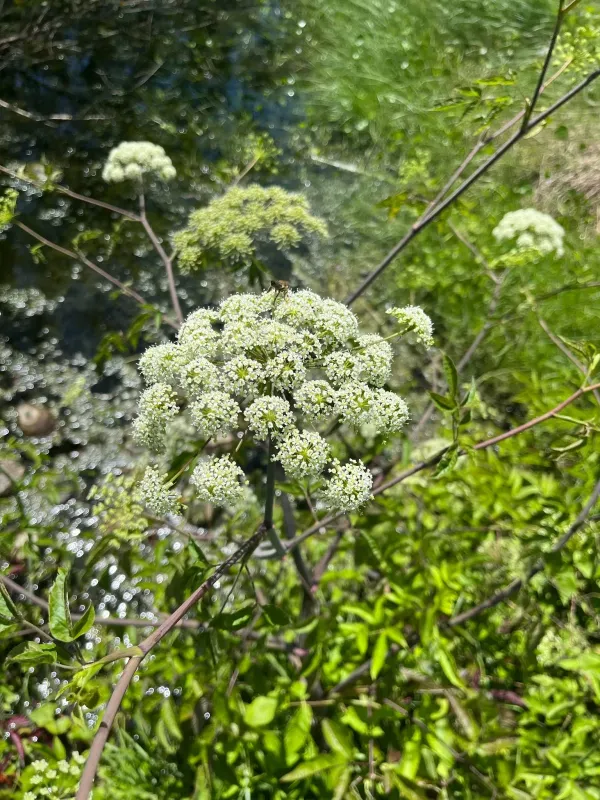
Botanically, the plant is characterized by a thick, chambered rootstock containing cicutoxin, an extremely potent neurotoxin. The stem is smooth, hollow, and typically features purplish spots or streaks. The leaves are compound, and the white flowers are arranged in umbrella-shaped clusters known as umbels.
Environmental requirements for growth include a high demand for water. The species is sensitive to dry soil conditions, and its presence can often be used as an indicator of poor drainage in agricultural land. Changes in water table management are key to preventing its establishment in farming environments.
Control methods focus on mechanical removal and targeted herbicide applications. When removing the plant, it is crucial to extract the entire root system, as residual parts can regenerate. Safety precautions are paramount, given that every part of the plant is toxic; manual handling should always be performed with protective gear.
Main diseases and pests
The plant exhibits high resistance to common pathogens and pests due to its potent alkaloid content, which acts as a deterrent. Rather than suffering from diseases, the plant is a significant threat to farming operations, as it displaces desirable vegetation and poses a severe risk of fatal poisoning to grazing animals.