
Douglas water hemlock
Cicuta douglasii
Description
Growing requirements
Douglas water hemlock is a perennial herbaceous plant belonging to the Apiaceae family, well-known for its dangerous, parsnip-like root system.
The plant originates from western North America, typically occupying wetlands, stream banks, and areas with consistently saturated soil conditions.
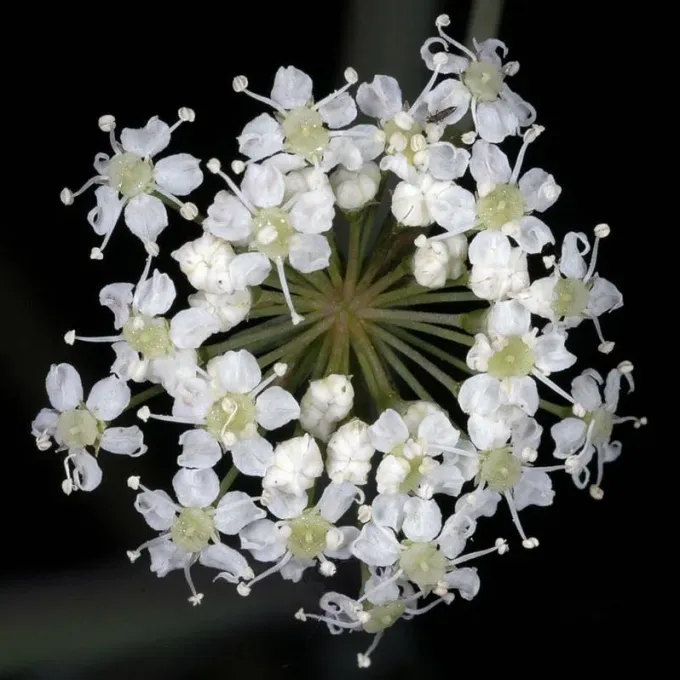
Botanically, it features pinnately compound leaves and small white flowers arranged in umbels, which is characteristic of the carrot family members.
Soil requirements are strictly linked to moisture; the plant thrives in rich, alluvial soils where groundwater remains accessible throughout the growing season.
In an agricultural context, it is strictly classified as a toxic weed rather than a crop, posing a significant threat to livestock safety in pasturelands.
Main diseases and pests
The primary concern with Cicuta douglasii is its extreme toxicity, as it contains cicutoxin, which causes severe neurological distress in mammals.
There are no known agricultural uses for this species, and its presence is detrimental to both biodiversity and the safety of grazing animals.
The plant demonstrates high resistance to common insect pests, primarily due to the chemical defenses present in its tissues that deter herbivores.
Fungal diseases are rarely a limiting factor for this species, as it maintains a robust growth strategy in its preferred riparian environments.
Effective management involves manual removal of the entire root structure, ensuring that no residues are left to sprout, while avoiding skin contact.