
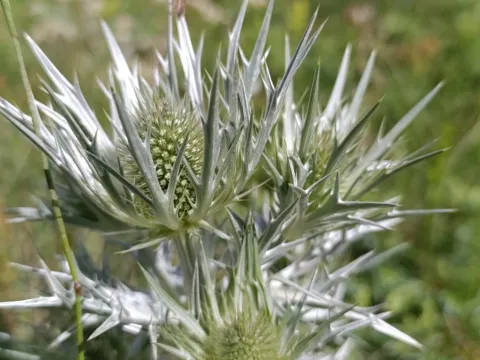
Silver-white eryngo
Eryngium spinalba
The silver-white eryngo (Eryngium spinalba) is typically propagated through seeds, which require a period of cold stratification to break dormancy before germination can occur effectively.
What the section contains
Silver-white eryngo
For optimal results, seeds should be sown in late autumn to allow the natural winter frost to provide the necessary stratification, or kept in moist conditions at 4 degrees Celsius for several weeks prior to spring planting.
Young plants should be spaced at least 40-50 cm apart to ensure proper air circulation and to prevent the development of root issues, as the plant needs sufficient space to establish its deep taproot system.
Early stage development is slow, requiring dedicated weed control during the first season to ensure the seedlings are not outcompeted by more aggressive field vegetation.
The soil should be kept lightly moist but well-drained during the initial germination phase; waterlogging should be strictly avoided to prevent the seeds from decaying in the substrate.
As a member of the Apiaceae family, Eryngium spinalba thrives in well-drained, lime-rich, or rocky soils, which mimic its natural alpine and sub-alpine habitat in Southeastern Europe.
This plant is highly drought-tolerant and sunlight-demanding, preferring full sun exposure to maintain its characteristic structure and vibrant silver coloration of the flower heads.
The ideal soil pH is between 6.5 and 8.0; on heavier clay soils, the addition of coarse sand or grit is mandatory to prevent crown rot, which is the primary cause of plant loss.
The crop is frost-hardy and survives winter temperatures well, provided the soil remains free of stagnant water, which can damage the dormant crown and roots during freeze-thaw cycles.
Once established, the plant requires very little supplemental water or fertilizer, as it is adapted to nutrient-poor environments and excessive fertilization may lead to weak, leggy growth.
The silver-white eryngo is commercially cultivated primarily for the floral industry, where its rigid, silver-hued flower heads are highly valued as durable, long-lasting dried floral elements.
Productivity is calculated based on the number of stems per square meter and the quality of the inflorescences, which must reach maturity and stiffening before being harvested.
It also serves as a significant nectar source for pollinators, making it an excellent companion crop for integrated pest management and biodiversity support in modern agricultural settings.
The economic value is high in niche markets for dried flowers, as the plant retains its structural integrity for years, providing a premium product for wholesalers and crafters.
Yields are typically highest in mature stands where the root systems are fully developed, usually starting from the third year of cultivation in a permanent field site.
Root rot caused by fungal pathogens is the most common threat, especially in areas with poor drainage or during seasons with unusually high rainfall and humidity levels.
Aphids and spider mites may infest the plant during hot, dry spells, necessitating regular field monitoring and the application of targeted, environmentally friendly control measures.
Powdery mildew can occur in stagnant air conditions, which is mitigated by proper field layout and ensuring adequate spacing between rows to promote natural ventilation.
Slugs and snails can cause significant damage to young emerging shoots, requiring the use of physical or organic barriers around the base of the plants in early spring.
Nematodes are less frequent but can be a concern in some soil types, requiring strict crop rotation practices to keep the land productive and healthy over the long term.
Harvesting for floral production should be done during dry weather to ensure that the moisture content is low, which is crucial for the success of the post-harvest drying process.
The inflorescences are typically harvested when they have fully hardened and show their characteristic silver color, ensuring they will not droop or change shape upon drying.
Post-harvest, stems should be hung upside down in a dark, well-ventilated location to prevent the pigments from fading under direct UV light exposure.
Seed harvesting requires careful timing, as the seeds shatter easily; they should be collected as soon as the flower heads turn brown but before they release their contents.
Once the harvest cycle is complete, old growth is removed from the field to clear the ground, providing a clean start for the next growing season and preventing disease buildup.