
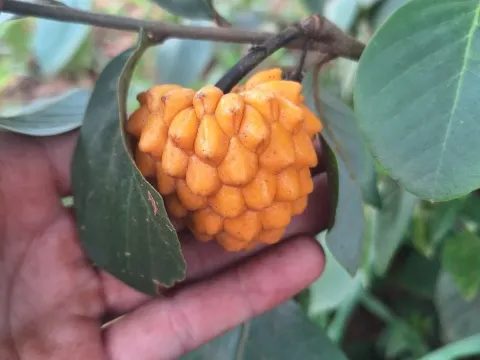
Annona cornifolia
Annona cornifolia
Annona cornifolia is a member of the Annonaceae family, native to the tropical regions of South America, specifically the Cerrado biome in Brazil. It typically grows as a small shrub or tree.
What the section contains
Annona cornifolia
The plant thrives in a tropical climate characterized by distinct wet and dry seasons. It requires plenty of sunlight for optimal growth and fruit development, meaning it should not be grown in heavily shaded areas.
Regarding soil requirements, this species is adapted to well-drained, acidic to neutral soils. It is notably resilient in nutrient-poor environments, making it a potentially valuable crop for marginal lands.
Water management is critical; while the plant can withstand periods of drought, it is highly sensitive to waterlogging. Good drainage is essential to prevent root rot, especially during the peak of the rainy season.
Temperature sensitivity is a key factor, as the species is strictly tropical and cannot tolerate frost. Consistent warmth is necessary for the plant to maintain its metabolic activities and ensure fruit set.
The primary economic use of Annona cornifolia is the consumption of its edible fruits, which are appreciated for their unique flavor profile. The fruit pulp is typically consumed fresh by locals.
Beyond fresh consumption, the fruit is utilized in various culinary preparations, such as refreshing beverages, jams, and traditional desserts. Its flavor adds a distinct tropical element to local cuisine.
Although the fruit is highly perishable and not currently suited for mass international export, it remains an important subsistence crop and a key component of local biodiversity in its native range.
Yield stability in wild populations varies depending on annual rainfall and pollinator activity. Cultivated specimens, when managed with proper pruning and fertilizing, show increased potential for regular harvests.
The species also holds value in agricultural research as a genetic resource for improving the hardiness of other Annona species against poor soil conditions and local pathogens.
Pest issues primarily involve sap-sucking insects like mealybugs and scale insects. These pests can weaken the plant by extracting nutrients, leading to stunted growth and reduced leaf density.
Fungal pathogens are a significant threat, especially when humidity remains high for extended periods. These diseases often manifest as leaf spots or fruit rot, which can destroy the majority of the harvest.
Pollination remains a challenging aspect of cultivation, as the plant relies on specific beetles for effective fruit set. A decrease in natural pollinator populations directly impacts the yield.
Weed competition in the early stages of establishment can severely limit the growth of young Annona cornifolia trees. Regular maintenance of the root zone is a standard necessity for healthy development.
Environmental degradation in the Cerrado biome threatens wild stands, making the promotion of controlled cultivation an essential strategy for both commercial use and species conservation.