
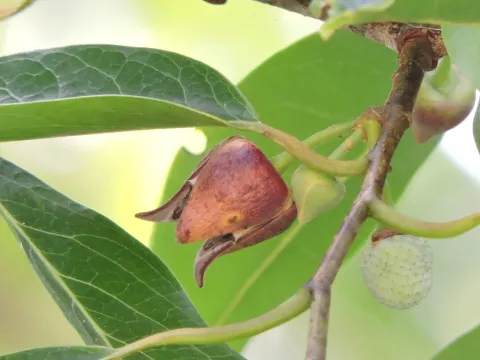
Annona cacans
Annona cacans
Propagation of Annona cacans is primarily achieved through seeds. Freshly harvested seeds have high germination rates, but their viability decreases rapidly upon drying; therefore, sowing should be carried out immediately after extraction from the fruit.
What the section contains
Annona cacans
To accelerate germination, seeds can be soaked in warm water for 24 hours. The sowing substrate must be light, well-drained, and nutrient-rich to ensure the development of a healthy root system during the initial growth stage.
The temperature for germination should be maintained between 25–28 degrees Celsius. It is crucial to avoid waterlogging the soil, which can lead to seed rot, thus watering should be moderate and consistent.
Seedlings should be transplanted after the appearance of the first pair of true leaves. The plant is sensitive to root disturbance, so moving it into its permanent location should be done using the root-ball preservation method.
For the first few years, saplings require protection from harsh direct midday sun and strong winds. Gradual adaptation to outdoor conditions promotes better rooting and the formation of a strong, structural tree frame.
Annona cacans, a member of the Annonaceae family, is a tropical tree requiring specific conditions for active growth. Native primarily to the forests of Brazil, it prefers a warm, humid climate without significant temperature fluctuations.
The crop has high soil quality requirements. The tree thrives best in deep, organic-rich loams that possess excellent water permeability, which prevents moisture stagnation around the roots.
The plant is photophilous, although it can tolerate light shading when young. For optimal fruit production, a mature tree requires access to direct sunlight for the majority of the daylight hours.
The optimal temperature range for vegetation is 20–30 degrees Celsius. The tree is extremely sensitive to frost; even short-term drops in temperature below zero can cause serious damage to the crown or lead to the death of the plant.
In regions with a marked dry season, the tree requires regular irrigation. Maintaining adequate air humidity is a critical factor for successful flowering and the setting of fruit.
The fruits of Annona cacans are round berries with a firm skin, concealing aromatic pulp inside. Unlike other species in the genus, the pulp of this fruit has a specific taste and texture, making it a valuable local food product.
The yield of the tree strongly depends on pollination conditions. In its natural habitat, pollination occurs with the help of specific insects; therefore, in orchards or gardens, manual pollination may be required to increase fruit set.
A mature tree begins to bear fruit 4–6 years after planting, provided agricultural standards are met. The total yield gradually increases as the crown expands and the tree strengthens.
Fruits ripen unevenly, requiring multiple selective harvests throughout the season. It is important to identify the moment of technical ripeness correctly, as unripe fruits have a hard texture, and overripe ones are prone to rapid spoilage.
Average yields per tree can reach several dozen kilograms, although this figure varies significantly depending on light exposure, soil fertility, and the availability of regular irrigation.
Annona cacans may be subject to attacks by various pests typical of tropical fruit crops. Mealybugs and scale insects pose the greatest danger, as they feed on the sap of young shoots and leaves.
In conditions of high humidity, the tree is susceptible to fungal diseases such as anthracnose. Symptoms include dark spots on leaves and fruits, which, if untreated, can lead to fruit drop.
Root rot represents a serious threat in cases of incorrect watering regimes and poor soil drainage. Infection spreads rapidly if roots are kept in consistently waterlogged, oxygen-deprived environments.
To combat pests, the use of biological insecticides or preventive treatment with soap solutions is recommended. Strict adherence to sanitary standards in the garden remains an essential control method.
Regular pruning of the crown improves air circulation, which reduces the risk of fungal infections. Prompt removal of infected plant parts is necessary to prevent the further spread of pathogens.
Harvesting Annona cacans is done by hand as the fruits reach consumer ripeness. Readiness can be determined by a slight change in skin color and the emergence of a characteristic aroma.
The fruits are quite delicate and prone to mechanical damage if dropped or handled roughly during transport. When harvesting, use soft containers and arrange fruits in a single layer to avoid bruising.
Post-harvest, the fruits require quick distribution, as their shelf life in fresh form is limited. Cool storage can extend freshness by a few days, but freezing the pulp remains the best preservation method.
Transportation must be carried out in ventilated crates to prevent premature ripening and the development of rot. Maintaining appropriate cargo spacing is critical due to the high sugar content of the fruits.
In culinary use, the pulp is utilized for desserts, juices, and beverages. Its unique flavor makes this Annona species highly sought after in the regional cuisines where it is cultivated.