
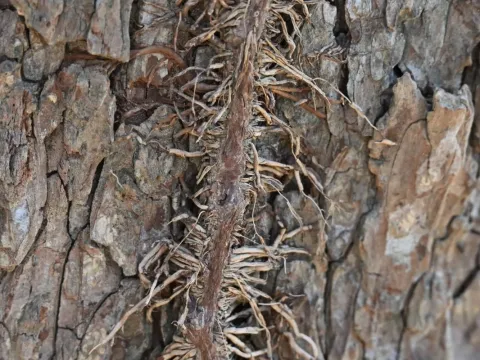
Poison ivy
Toxicodendron radicans
Toxicodendron radicans, commonly known as poison ivy, belongs to the Anacardiaceae family. While it is not a cultivated crop, its management is a critical aspect of agricultural land maintenance due to the toxicity of the urushiol oil found in all parts of the plant.
What the section contains
Poison ivy
Originating from North America, the species has a vast natural range. It thrives in diverse environments, ranging from dense forests and thickets to open fields and disturbed soil, acting as a competitive colonizer that displaces native vegetation.
The plant exhibits high ecological flexibility regarding soil requirements. It prefers well-drained, fertile soil but grows vigorously in sandy or rocky substrates. It is particularly noted for its ability to tolerate varying soil acidity levels.
Climatic adaptability is one of its primary strengths. It flourishes in temperate and subtropical climates, demonstrating high resilience to drought and seasonal temperature fluctuations. This adaptability allows it to establish quickly in managed landscapes.
Growth habits involve both trailing vine and shrub-like forms. Its complex root system makes eradication challenging, as even small remaining rhizome fragments can regenerate rapidly, necessitating systematic herbicide treatments for effective land clearing.
Poison ivy possesses strong natural defense mechanisms, making it resistant to most common plant pathogens. While some fungal leaf spot diseases may appear in dense, non-ventilated populations, they rarely impact the plant's overall vitality.