
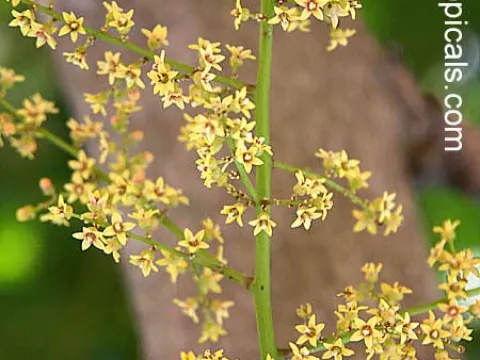
Pseudospondias
Pseudospondias
Pseudospondias is a genus of evergreen trees belonging to the Anacardiaceae family. These plants are primarily native to tropical regions of Africa, thriving in dense forest environments and moist lowland areas.
What the section contains

Pseudospondias
The cultivation of this plant requires a humid tropical climate with consistent temperatures throughout the year. It performs best in fertile, well-draining soils that maintain moisture levels necessary for rapid biomass accumulation.
Agronomic management involves selecting sites with adequate precipitation. While the tree can tolerate various soil textures, it is most productive in deep, nutrient-rich soils. Proper site selection is crucial for long-term tree stability and fruit yield.
The cultural practices focus on canopy management and moisture regulation during the early growth stages. Ensuring that young trees have sufficient light while protecting them from extreme weather conditions is essential for successful establishment.
Economically, Pseudospondias is valued for its edible fruits and versatile timber. The wood is utilized for local construction, while the fruit provides a supplement to the diet of local communities, making it an important agroforestry species.
The main phytosanitary challenges include various fungal infections that thrive in high-humidity tropical conditions. These pathogens primarily affect the foliage and can reduce the photosynthetic efficiency of the tree.
Insect pests, such as wood-boring beetles and caterpillars, pose a significant risk to the health of the stem and branches. Infestations can lead to secondary infections and long-term damage to the plant structure.
To mitigate these threats, integrated pest management (IPM) practices should be implemented. This includes regular field inspections and the removal of heavily infested or diseased plant tissue to prevent spreading.
Maintaining proper spacing between trees enhances airflow, which significantly reduces the risk of fungal spread. Furthermore, providing adequate nutrients helps the tree maintain a natural defense mechanism against biotic stressors.
In cases of severe infestation, targeted biological control agents or soft pesticides may be used. Maintaining a clean orchard environment is the most effective proactive strategy for long-term health and productivity.