
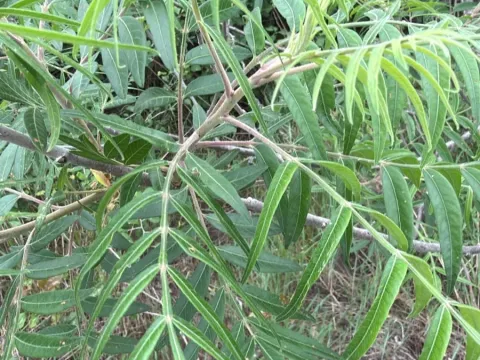
Prairie flameleaf sumac
Rhus lanceolata
Rhus lanceolata, commonly known as prairie flameleaf sumac, is a woody shrub within the Anacardiaceae family. It is native to the central and southern United States, specifically thriving in limestone habitats, prairies, and open rocky woodlands.
What the section contains
Prairie flameleaf sumac
The plant is highly valued for its extreme drought tolerance and its ability to adapt to thin, nutrient-poor soils. It features pinnately compound leaves with narrow, lanceolate leaflets and produces dense clusters of small white flowers.
Cultivation requires full sun exposure to ensure optimal density and vibrant fall coloration. The plant is best suited for well-draining sites, as it does not tolerate heavy, waterlogged soils which can lead to rapid root decline.
Regarding agricultural management, this species requires very little maintenance once established. It is an excellent choice for xeriscaping and soil stabilization projects in regions characterized by low precipitation and hot summers.
The fruit of the sumac appears as fuzzy, red drupes that remain on the branches throughout the winter. These provide a significant source of food for various bird species, enhancing the ecological value of the planting site.
The primary concern for Rhus lanceolata health is moisture-related issues. Excessive soil humidity or poor drainage creates a perfect environment for soil-borne pathogens, leading to root rot and eventual plant collapse.
Fungal leaf spots can occur during periods of high humidity and poor ventilation. Keeping the canopy open through proper spacing and occasional thinning is an effective way to manage these minor fungal concerns.
Pests such as scale insects may occasionally infest the stems. If left untreated, these insects can weaken the plant, making it more susceptible to environmental stressors and opportunistic wood-boring insects.
To maintain plant vitality, it is recommended to monitor for early signs of wilting or discoloration. Implementing a strict irrigation schedule that allows the soil to dry out between waterings is essential for long-term health.
When pests are detected, targeted horticultural oils or systemic insecticides are generally effective. Regular scouting is the best strategy to keep the sumac population thriving in diverse landscape settings.