
Pistacia saportae
Pistacia saportae
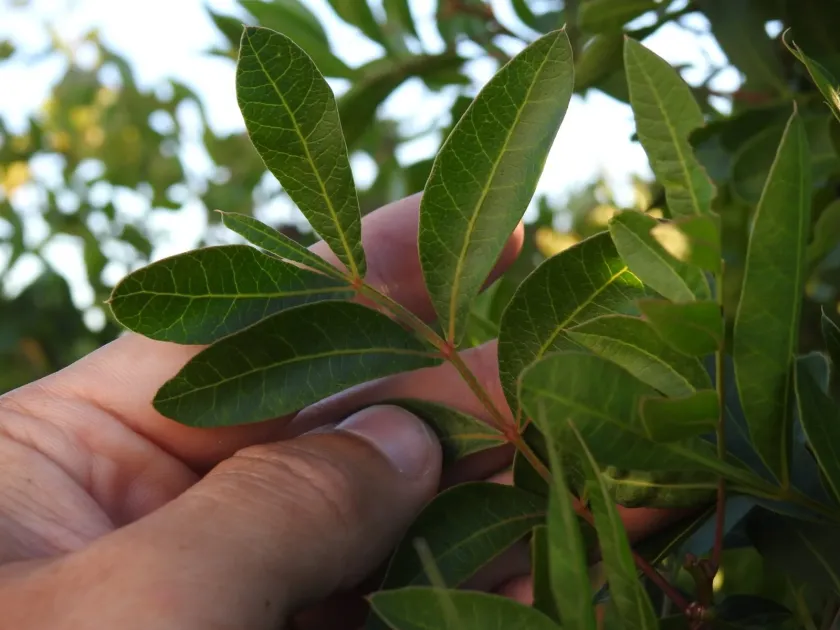
Description
Growing requirements
Pistacia saportae is a natural interspecific hybrid resulting from the cross-pollination between the common pistachio (Pistacia vera) and the mastic tree (Pistacia lentiscus). This plant belongs to the Anacardiaceae family, which includes various significant nut-bearing trees and resinous species.
The native range of this species is primarily concentrated in the Mediterranean basin, where both parent species coexist. It thrives in dry subtropical climates characterized by mild winters and long, hot, arid summers, reflecting its adaptation to Mediterranean environmental conditions.
The cultivation of this plant requires well-drained, lime-rich, or rocky soils. It is highly drought-tolerant; however, for optimal development and canopy growth, it requires full sun exposure and protection from excessive humidity which can negatively affect its root development.
Agronomic management focuses on establishing the plant in its early stages by ensuring proper soil drainage and limited irrigation. The species is highly valued not only for its botanical rarity but also as a resilient rootstock in orchard management due to its adaptability to difficult soil types.
Economically, Pistacia saportae is often utilized in xeriscaping, erosion control, and as a specialized rootstock. While its nuts are edible, they are generally smaller than those of the common commercial pistachio, making its primary value lie in its environmental resilience and genetic traits.
Main diseases and pests
The main threats to the plant include fungal diseases such as powdery mildew and various root rots, typically triggered by high soil moisture or poor ventilation within the canopy. Pruning to maintain an open structure is the most effective cultural practice to prevent these issues.
Common pests include the pistachio psyllid and several types of gall-forming insects that can affect fruit development. Implementing an integrated pest management strategy, including monitoring and biological controls, is essential for maintaining the health and productivity of the trees.