
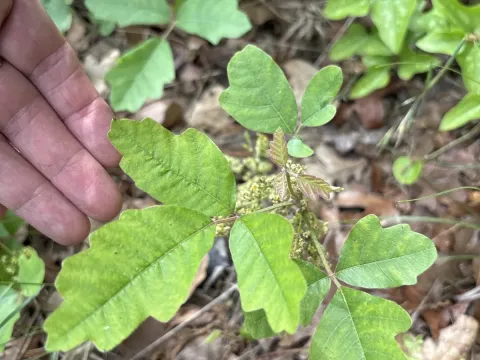
Atlantic poison oak
Toxicodendron pubescens
The sowing of Atlantic poison oak seeds is typically performed in autumn to satisfy the cold stratification requirement necessary for successful germination. Seeds are sown in well-prepared beds at a shallow depth.
What the section contains
Atlantic poison oak
If spring planting is preferred, seeds must undergo scarification to break their hard seed coat. This mechanical or chemical treatment enhances the rate and uniformity of emergence.
Seedlings require protection from intense direct sunlight during their first growing season to prevent desiccation. Consistent soil moisture must be maintained during the early developmental stages.
Root cuttings serve as a reliable method for vegetative propagation. Cuttings should be harvested during the dormant phase and kept in a sandy, well-aerated medium to promote root growth.
Transplanting to the permanent site is best carried out in early spring, allowing the root system to establish itself before the onset of extreme summer heat.
Atlantic poison oak belongs to the Anacardiaceae family. It is a deciduous shrub native to the southeastern United States, well-adapted to various environmental conditions.
The plant thrives in well-drained soils, preferably sandy or loamy textures. It shows remarkable tolerance for nutrient-poor substrates, making it a hardy species in challenging environments.
Exposure to full sun is ideal for vigorous growth. While the plant can tolerate partial shade, productivity and overall vitality are maximized in sun-drenched locations.
The shrub is highly drought-tolerant, surviving periods of water scarcity that would be detrimental to less resilient crops. It requires moderate temperate climates for optimal development.
Agricultural management must prioritize safety protocols due to the presence of urushiol in all plant tissues, which causes severe contact dermatitis in sensitive individuals.
Leaf-feeding insects, including various lepidopteran larvae, represent a common threat. These pests can cause significant defoliation if populations are left uncontrolled.
Powdery mildew is a prevalent fungal disease that affects the foliage, especially in environments with poor air circulation and high humidity levels.
Leaf rust can occur during extended wet seasons, requiring regular inspections and the application of fungicides to protect the plant's health and photosynthetic capacity.
Aphid infestations are frequently observed on young, succulent shoots. These pests can weaken the plant and serve as vectors for secondary viral pathogens.
Root rot is typically associated with waterlogged soils. Proper site selection and drainage management are essential to prevent the accumulation of moisture near the root zone.