
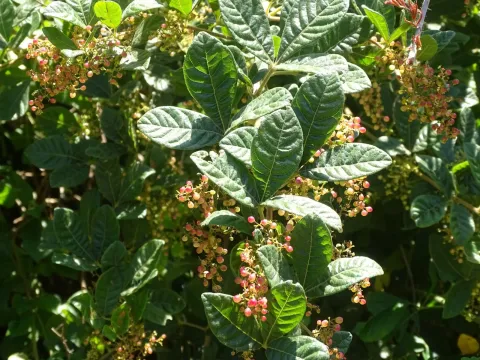
Cape sumach
Rhus macowanii
Rhus macowanii, commonly known as the Cape sumach, is a woody plant belonging to the Anacardiaceae family. This species is native to the southern regions of Africa, thriving primarily in temperate climatic zones where it exhibits significant adaptability to local environmental conditions.
What the section contains
Cape sumach
The culture requires well-drained, nutrient-rich soil with a neutral or slightly acidic pH level to ensure optimal growth. While the plant is notably drought-tolerant, providing sufficient direct sunlight is essential for maintaining its health, foliage density, and overall biological vigor.
In its natural habitat, the Cape sumach is often found in coastal regions, making it resilient to saline winds and specific microclimatic stresses. In agronomic practices, it is crucial to avoid waterlogging the soil, as stagnant moisture can quickly lead to root decay and long-term decline.
Botanically, it grows as either an evergreen or semi-evergreen shrub or a small tree. Its compact and attractive branching habit makes it a valuable asset for both commercial and ornamental applications, contributing to biodiversity in the landscape.
Economic and utility applications for this species include the creation of dense hedges, soil stabilization on embankments to prevent erosion, and the use of its durable wood in traditional crafts. Its resilience makes it an ideal candidate for reforestation efforts in subtropical regions.
Although Rhus macowanii is generally a robust species, it remains susceptible to various pests common to the Anacardiaceae family. Aphids and scale insects are among the primary threats that may infest young shoots, drawing sap and hindering the plant's structural development.
Fungal pathogens, such as root rot, typically manifest when agrotechnical standards are neglected, particularly regarding over-irrigation or the selection of heavy, non-porous soil textures. Implementing proper spacing and pruning ensures better air circulation, which significantly mitigates these risks.
Defoliating insects can occasionally cause minor cosmetic damage, though substantial yield or aesthetic losses are uncommon if standard care protocols are strictly followed. Regular monitoring of the canopy is advised to identify early signs of infestation and allow for targeted biological intervention.
Systematic sanitary pruning is a critical component of plant health management, as it facilitates the removal of dead or compromised wood. This practice prevents the spread of opportunistic fungal pathogens that thrive in unkempt, dense foliage areas.
Finally, special attention must be given to the root crown zone, as this area is most sensitive to prolonged dampness. Maintaining balanced soil moisture and ensuring a porous, healthy growing medium are fundamental strategies for preventing disease outbreaks in this cultivated species.