
Chinese sumac
Rhus chinensis
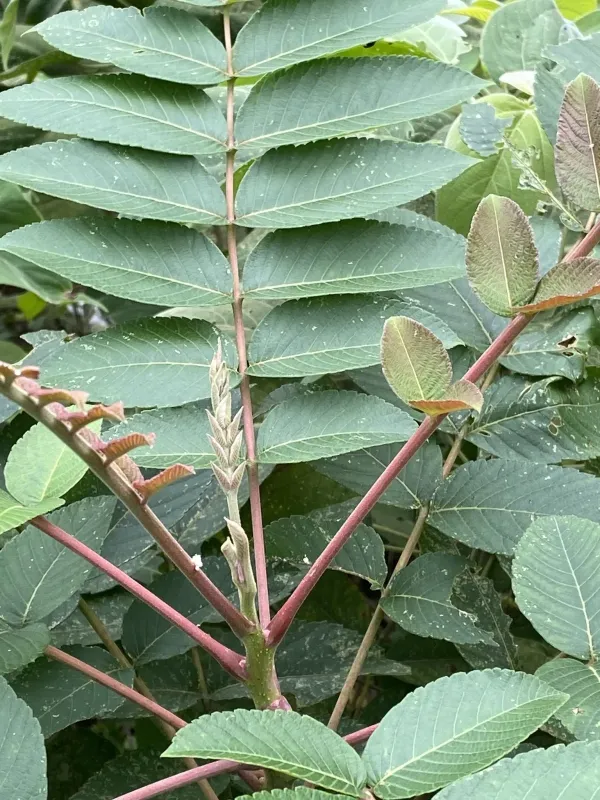
Description
Growing requirements
Chinese sumac (Rhus chinensis) is a deciduous shrub or small tree belonging to the Anacardiaceae family. It is native to East Asia, thriving particularly in regions of China, Korea, and Japan where it is an ecologically significant species.
The plant prefers well-drained, fertile soil with a neutral to slightly acidic pH. It requires plenty of direct sunlight to develop properly and should be planted in open areas sheltered from strong, damaging winds.
It is adapted to subtropical and temperate climates. While Chinese sumac exhibits moderate cold tolerance, young plants need protection during harsh winters to prevent frost damage to the stems and buds.
Agrotechnical maintenance includes regular cultivation of the soil around the base and moderate irrigation during extreme drought periods. It responds well to organic fertilization in the early spring to support vigorous growth.
Propagation is primarily achieved through root suckers, which ensures the maintenance of desired traits. Seed propagation is also possible but requires cold stratification to break dormancy.
Yield
The main commercial value of Chinese sumac lies in the production of "Chinese gallnuts." These are abnormal growths on leaves caused by the activity of specific aphids, which act as a rich source of gallotannins.
Gallnuts are highly valued in the leather tanning industry for producing high-quality leather. They contain high concentrations of tannins, often exceeding 60% of their dry weight.
Beyond leather production, these gallnuts are vital in medicine for their astringent properties and in the chemical industry for the production of special inks and dyes.
Industrial yields depend heavily on the effective management of aphid populations. Controlled inoculation of plantations with these aphids is a common practice to maximize the output of high-quality gallnuts.
In addition to the gallnuts, the fruit of the sumac can be used in the food industry as a flavoring agent or natural food coloring, adding a characteristic tartness to various dishes.
Main diseases and pests
The primary biotic factor is the relationship with the aphid Schlechtendalia chinensis. Managing this population is a delicate balance; it must be high enough to induce gall formation but not so large that it destroys the host plant.
Fungal diseases, such as leaf spot and powdery mildew, represent a significant threat to overall plant health, especially in humid or poorly ventilated plantation environments.
Root rot is a common danger when plants are grown in heavy or waterlogged soils. Ensuring excellent drainage is a critical step in the site selection and preparation process for sumac.
Insect pests, such as weevils or leaf-chewing larvae, can damage the foliage and reproductive buds, necessitating a scouting program and potential insecticide application if thresholds are exceeded.
Regular sanitation pruning is essential to maintain plant vigor. By removing dead or crowded branches, the gardener improves airflow through the canopy, reducing the risk of disease spread.
Harvesting
Gallnut harvesting is a manual process that typically occurs in late summer or early autumn. The timing is crucial; the galls must be picked before the insects emerge and the galls crack open.
Post-harvest treatment is mandatory to stabilize the product. The galls are usually steamed or kiln-dried to kill the insects inside and stabilize the chemical composition, preventing degradation.
Fruit harvesting is conducted after full maturity, indicated by the change in color to deep red or brown. Once harvested, the fruits are cleaned and dried in a shaded, well-ventilated location.
Handlers should exercise caution, as the plant tissue contains sap that may cause contact dermatitis in sensitive individuals. Protective gear is recommended during intensive harvesting operations.
Stored raw materials must be kept in cool, dry, and moisture-proof storage containers. Given the high affinity of tannins for moisture, preventing dampness is essential to maintaining market quality.