
Sand amaranth
Amaranthus arenicola
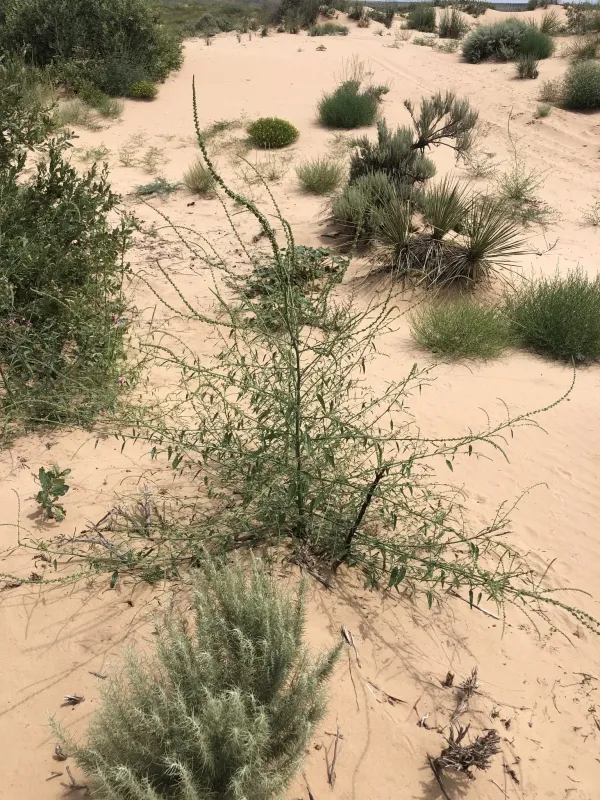
Description
Sowing dates
Sand amaranth is a heat-loving crop, therefore planting should only be carried out after the soil temperature reaches 14-16 degrees Celsius at planting depth. The optimal sowing window in most regions falls in the second half of May, once the risk of spring frost has completely passed.
For successful germination, a firm seed-to-soil contact is essential; therefore, rolling the field after sowing is highly recommended. Seeds should be planted at a shallow depth of 1 to 2 centimeters, as they are small and require a degree of light to initiate the germination process.
It is crucial to note that the crop is sensitive to weed competition during the early stages of growth. Sowing schedules must be planned to ensure rapid canopy closure, which naturally suppresses weed development between the rows.
Row planting with spacing between 45 and 70 centimeters is recommended to facilitate proper field maintenance. This spacing allows for mechanical inter-row cultivation and ensures that each plant has optimal access to soil nutrients and moisture.
When grown for forage, a slightly higher planting density is acceptable. However, for seed production, density must be strictly controlled to prevent lodging and to ensure uniform maturation of the flower heads.
Growing requirements
Sand amaranth is a high-productivity species of the Amaranthaceae family, well-adapted to light, sandy, and loamy soils. The plant demonstrates exceptional drought tolerance, making it a viable crop for regions characterized by limited water availability.
The crop has moderate fertility requirements but thrives best in soils with a neutral or slightly alkaline pH. It responds well to nitrogen fertilization, which facilitates rapid vegetative biomass accumulation throughout the growing season.
The optimal temperature range for active growth is between 25 and 30 degrees Celsius. Even during prolonged dry spells, the plant maintains turgor pressure due to a highly developed root system capable of penetrating deep into the soil profile.
This species is photophilous and cannot tolerate shading. When selecting planting sites, it is critical to choose open, well-lit fields sheltered from strong winds, which can damage the tall stalks during the flowering and seed-setting stages.
Agronomic management includes the application of phosphorus and potassium fertilizers to increase structural integrity and promote seed maturation. Under irrigation, this crop is capable of producing remarkably high yields of green biomass.
Main diseases and pests
Common diseases affecting Sand amaranth in humid conditions include root rot and powdery mildew. Outbreaks of these fungal infections occur more frequently when crop rotation cycles are ignored or when irrigation management is inconsistent.
Among pests, the amaranth weevil and various aphid species pose the greatest threat, as they feed on young leaves and developing inflorescences. During severe droughts, crops may be susceptible to spider mite infestations, which significantly weaken the plants.
Protecting crops requires maintaining spatial isolation from wild relatives, which often serve as reservoirs for diseases and pests. Phytosanitary screening of seed lots before sowing is a vital preventative measure to ensure crop health.
Implementing integrated pest management (IPM) strategies, including the use of biological insecticides, helps minimize chemical dependency. Regular monitoring of the fields during critical development stages is key to maintaining high yields.
Should initial signs of fungal infection appear, treatment with approved systemic fungicides is necessary. Comprehensive agronomic management remains the most effective defense against widespread disease outbreaks.