
Salsola orientalis
Salsola orientalis S. G. Gmel.
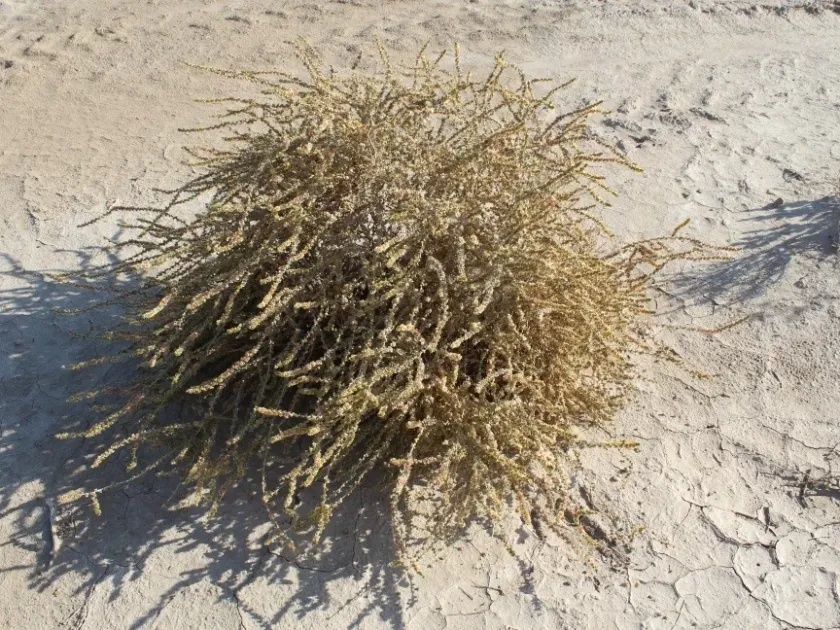
Description
Sowing dates
Sowing of Salsola orientalis is typically performed in early spring when the soil retains sufficient moisture. In arid regions, late autumn sowing is sometimes practiced to allow seeds to benefit from winter moisture.
Seeds should be sown at a shallow depth of 1-2 cm. Given their small size, proper seed-to-soil contact is essential, which is commonly achieved by light rolling after seeding.
The seeding rate must be adjusted based on seed viability and environmental conditions. Row spacing should be wide enough to allow for mechanical weeding, especially during the early growth stages.
The plant grows relatively slowly during the initial phase, requiring careful weed management. Early planting is vital to ensure plants are well-established before the intense summer heat.
Soil preparation should involve leveling the field to prevent erosion and ensure that seeds remain in place until germination occurs.
Growing requirements
Salsola orientalis, a member of the Amaranthaceae family, is a halophytic plant perfectly adapted to saline and alkaline soil conditions where other crops fail to survive.
It thrives in sandy, well-drained soils and exhibits remarkable resilience to extreme drought and high temperatures. It is an ideal species for restoring degraded lands in arid zones.
The plant requires full sun exposure for optimal development. Shading, even from neighboring weeds or overly dense planting, significantly reduces the yield of green biomass.
Its root system is deep and expansive, allowing the plant to reach groundwater and withstand prolonged periods without rainfall. This makes it a highly reliable resource.
It tolerates long growing seasons and thrives in regions characterized by intense sunshine and low annual precipitation rates, common in semi-desert environments.
Yield
The yield of Salsola orientalis is highly stable, even in years with minimal rainfall. This reliability makes it a crucial component of forage systems in drought-prone territories.
The total green biomass produced per hectare varies depending on soil fertility, but the plant maintains a consistent production level where traditional grasses would die.
The nutritive value remains high, as the plant retains proteins even as the stems and leaves begin to mature and dehydrate during the hot summer months.
Regrowth ability is a key feature, as the plant can produce multiple cuts within a single season if environmental conditions allow for moisture uptake.
Proper management of the harvesting time, targeting the late vegetative phase, ensures the best balance between biomass quantity and protein content for animal feed.
Main diseases and pests
Diseases in Salsola orientalis are generally rare but can include powdery mildew or leaf spot pathogens if the plant is exposed to excessive humidity or poor aeration.
Pests such as certain species of beetles and hemipterans can feed on the succulent tissues. However, the plant's natural chemical defenses often mitigate significant damage.
Soil-borne insects can pose a risk to germinating seedlings. Seed treatment or appropriate crop rotation cycles are recommended to reduce initial pest pressure.
Maintaining good airflow within the crop stand is the primary prophylactic measure against fungal issues, ensuring the plant foliage stays dry.
Integrated pest management strategies focusing on monitoring the crop cycle are usually sufficient to maintain healthy plant populations without intensive chemical use.
Harvesting
Harvesting for forage is ideally performed during the budding or early flowering stage, as this provides the highest concentration of essential nutrients.
When cutting for hay, the plant should be mown at a height that does not damage the crown, allowing the plant to recover and produce further growth.
Field drying is usually the standard practice, as the arid environment naturally facilitates the curing process, resulting in a stable and nutritious winter feed.
Seed harvest requires careful timing to prevent shattering, which can occur rapidly if the crop is left too long in the field after maturity.
Effective post-harvest management ensures that the nutritional quality is preserved, providing a valuable resource for livestock during periods of low natural forage availability.