
Prickly saltwort
Salsola kali L.
Description
Growing requirements
Prickly saltwort (Salsola kali L.) is an annual herb belonging to the Amaranthaceae family. It is a well-known halophyte, a plant species that thrives in environments with high salinity, such as coastal dunes and desert plains.
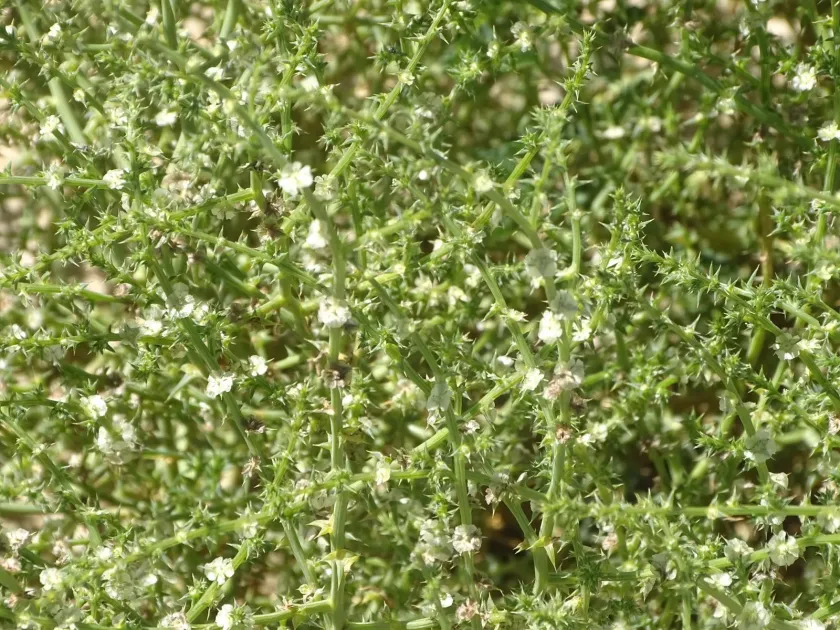
The plant features a branching stem that can grow up to 70 centimeters in height. Its leaves are narrow, succulent, and tipped with sharp spines, which are primary evolutionary mechanisms to conserve water and survive in high-salinity habitats.
It prefers sandy or gravelly soils with high levels of sodium and magnesium. Its ability to tolerate low soil fertility while flourishing in saline environments makes it a unique subject for ecological studies and land restoration projects.
Sunlight is the most critical environmental factor for the successful development of Salsola kali. It is an obligate heliophyte, meaning it requires full, unobstructed solar radiation to complete its reproductive cycle effectively.
Agronomically, it serves as an interesting model for phytoremediation. By accumulating minerals and salts from the soil, it acts as a natural cleanser, gradually improving the chemical composition of degraded and salty farmlands.
Main diseases and pests
Salsola kali is highly resistant to most common agricultural pests due to the high salt concentration in its tissues. This makes it a low-maintenance plant that rarely requires chemical intervention for pest control.
The main threats to the plant include physical damage from heavy traffic on dunes and competition from invasive plant species. Proper site management ensures the persistence of this species in its natural habitat.