
Salsola volkensii
Salsola volkensii
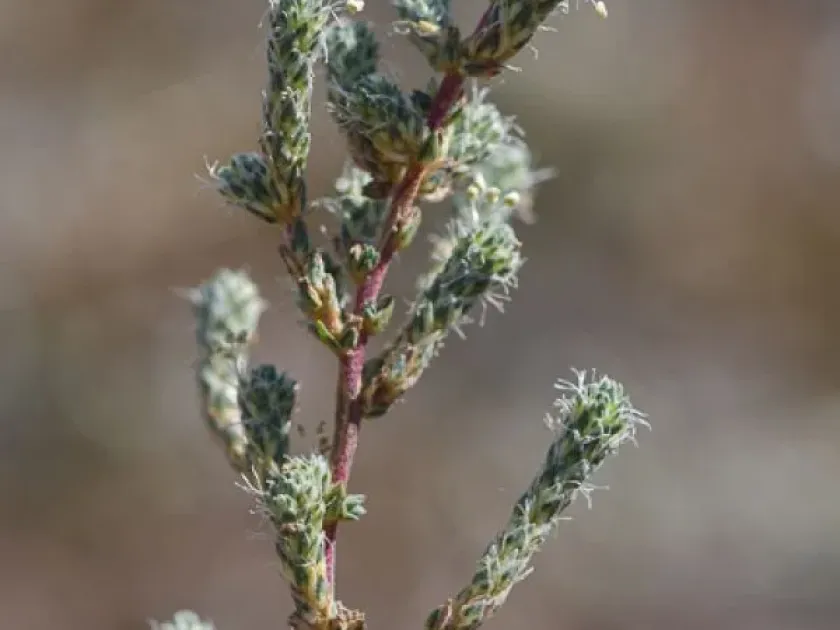
Description
Growing requirements
Salsola volkensii is an annual herbaceous plant belonging to the Amaranthaceae family, highly recognized for its remarkable salt tolerance. As a true halophyte, it serves as a critical component in the ecology of arid and saline landscapes.
The plant originates from the arid zones of Africa and the Middle East, where it has evolved to thrive in harsh, high-salinity environments. Its geographic distribution is limited to regions with high potential evapotranspiration and poor, mineral-rich soils.
This species requires intense sunlight to reach maturity and maintain high physiological activity. It is exceptionally resilient to drought conditions, employing specialized succulent tissues to conserve water during prolonged rainless periods.
Regarding soil conditions, Salsola volkensii performs optimally in sandy and gravelly textures that provide necessary aeration. It is an excellent candidate for the reclamation of saline-alkali soils, acting as a biological agent to stabilize sandy substrates.
Agricultural management of this crop involves careful seedbed preparation to ensure proper seedling establishment. Due to its unique physiology, it requires minimal inputs, making it a sustainable choice for marginal land utilization in desert agriculture.
Main diseases and pests
Primary threats to the health of Salsola volkensii involve root rot pathogens, which are typically exacerbated by waterlogged soil conditions. Proper soil drainage is essential to mitigate these biological risks during the early development phase.
Insects such as grasshoppers represent the main pest pressure, as they often graze on the succulent foliage. Monitoring populations during the peak growth season is necessary to prevent significant biomass loss in forage production areas.