
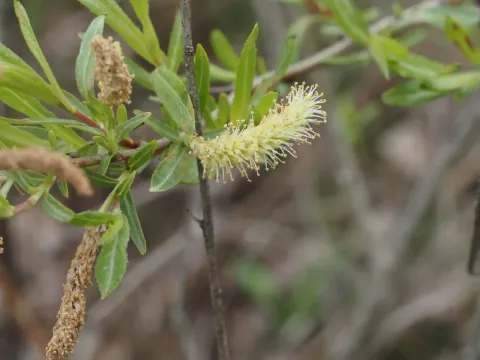
Salix interior
Salix interior
The establishment of Salix interior plantations is typically performed through vegetative propagation using cuttings or containerized seedlings. The optimal timing for planting is early spring as soon as the soil thaws and becomes workable, ensuring high survival rates.
What the section contains
Salix interior
In large-scale commercial operations, mechanical planters are employed to ensure precise density. A standard planting density ranges from 15,000 to 20,000 plants per hectare, which maximizes biomass accumulation and promotes uniform growth across the field.
Ensuring adequate soil moisture during the first few weeks following planting is critical for successful root establishment. In regions with insufficient rainfall, supplemental irrigation is recommended to prevent water stress in young plants.
Site preparation is a foundational step, involving deep tilling and effective weed control to reduce competition. Salix interior is particularly sensitive to competition from grasses and broadleaf weeds in its initial stages of development.
Monitoring the plantation during the first year is essential to assess root health and identify any mechanical damage or early pest pressure. Proper establishment during this year sets the stage for high productivity in subsequent harvesting cycles.
Salix interior, belonging to the Salicaceae family, is a riparian plant naturally adapted to riverbanks and floodplains. It exhibits remarkable resilience to periodic flooding, silting, and waterlogged soil conditions.
This species performs best in well-drained, light-textured soils, such as alluvial sand or sandy loams. However, it displays strong phenotypic plasticity and can thrive in a variety of soil types provided there is adequate moisture availability.
Being a highly light-demanding species, Salix interior requires full sun exposure for optimal photosynthetic efficiency. Growth in shaded environments leads to attenuated, weak shoots and reduced biomass yields, hindering commercial success.
The optimal pH range for this crop is between 5.5 and 7.5. While considered hardy, Salix interior responds well to nitrogen fertilization on nutrient-poor sites, which accelerates shoot elongation and overall dry matter production.
Salix interior is highly frost-tolerant, reflecting its native range across temperate regions of North America. It withstands extreme winter temperatures without requiring additional protection, making it suitable for northern agricultural zones.
Biomass yield in Salix interior is significantly influenced by management practices, plantation age, and site quality. Under optimal conditions, annual dry biomass yields range from 8 to 12 tonnes per hectare.
Peak productivity is typically reached between the third and fourth year after establishment as the root system fully develops. A well-managed plantation can remain economically productive for 15 to 20 years before requiring replanting.
Primary utilization includes the production of woody biomass for renewable energy, pulp, and paper industries. Due to the flexibility of its shoots, it has historically been used in basketry and other artisan crafts.
Research is increasingly exploring the pharmacological potential of Salix interior, specifically the concentration of salicin in the bark. This offers potential for secondary revenue streams beyond traditional biomass and energy markets.
The species' ability to resprout vigorously after harvest ensures a renewable cycle. Regular coppicing stimulates the development of numerous stems from the original rootstock, maintaining yield consistency throughout the plantation's lifespan.
Willow leaf beetles are among the most significant pests affecting plantations. Large infestations can rapidly defoliate entire blocks, drastically reducing photosynthesis and negatively impacting the growth rate of the shoots.
Willow rust, caused by various fungal pathogens, poses a major threat, particularly during warm and humid growing seasons. Infection leads to chlorosis, leaf drop, and stunted growth, weakening the plant's overall vigor.
Scale insects and aphids can cause localized damage by sap-feeding, which may introduce secondary fungal pathogens into the bark. Regular scouting is necessary during the peak growing season to mitigate large-scale outbreaks.
Integrated Pest Management (IPM) strategies, including the use of resistant clones and biological controls, are recommended to minimize reliance on synthetic fungicides and insecticides during the production cycle.
Genetic breeding programs focus on developing clones with high resistance to prevalent regional diseases. Selecting site-appropriate, resistant planting material is the most effective defense strategy for long-term plantation health.
Harvesting is performed exclusively during the winter dormancy period. Cutting when the sap flow has ceased ensures lower moisture content in the wood, which improves storage quality and increases the heating value of the biomass.
Modern commercial harvesting utilizes specialized forage harvesters equipped with header attachments that cut and chip the stems in a single pass. This process is efficient and reduces labor costs for large-scale operations.
A harvest interval of two to three years is generally optimal for balancing shoot diameter with biomass accumulation. This rotation cycle prevents the stems from becoming overly thick and difficult to process while maintaining yield.
It is critical to cut as close to the ground as possible to encourage healthy resprouting from the root collar. Irregular or high stumps can lead to decay and reduced stem density in subsequent growth cycles.
Following harvest, Salix interior plantations show rapid recovery, with little need for intensive maintenance. The combination of high regenerative capacity and low input requirements makes this species a robust choice for sustainable biomass production.